
From April 26 to November 9, LILLE 3000 will once again bring the city of Flanders to life, a city beloved by Belgians who sometimes only visit for a day. No, there's more to this medieval city-turned-modern metropolis than the braderie. Take a guided tour.
By Béatrice Demol
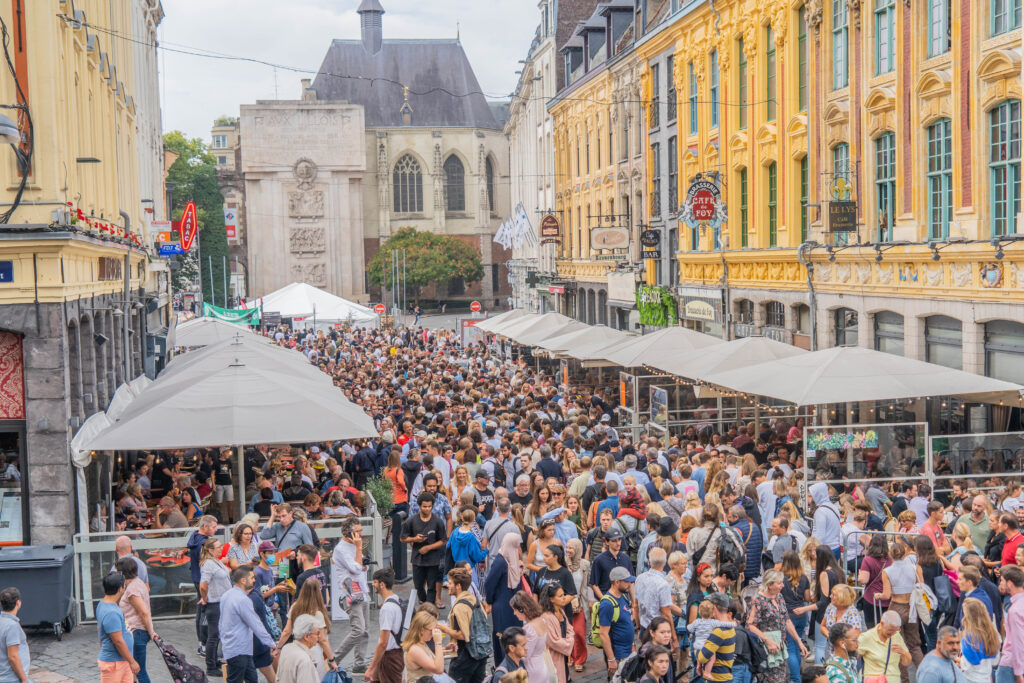
Beers, cheeses, chicory, French fries? Cheaper wines and soft drinks? Because French is spoken in the stores? When questioned, the Belgians we met in Lille evoke « a state of mind and a welcome closer to us than to Parisians ». Et paf. But also a well-balanced shopping destination, with big names and small boutiques, « with a much broader offering than in Belgium ». Et re-paf. Finally, our compatriots, about 15% of foreign visitors, those who complain about our dilapidated pavements, love to stumble on the cobblestone streets of Lille's Old Town. They love the gigantic braderie on the first weekend in September, Europe's biggest flea market. And many of them combine it with Lens and Roubaix for even more cultural visits.
Day 1: Old Lille
Looking back over the centuries and the eventful history of the capital of the Hauts de France region, we learn that it was Baudouin V who, in 1066, formalized the existence of the town, which was then no more than a small port on the Deûle, a tributary of the Lys. A small town, but already a commercial crossroads and the object of much covetousness and assault - the Spanish, the Burgundians, the Germans, the Austrians and the French, who all contributed to extending the fortified walls, some of which were designed by Vauban. Today, no one is bothered by the 18-kilometer border with Belgium, with the Flemish of Kortrijk on one side and the French-speaking of Mouscron on the other.
ARCHITECTURAL MELTING POT
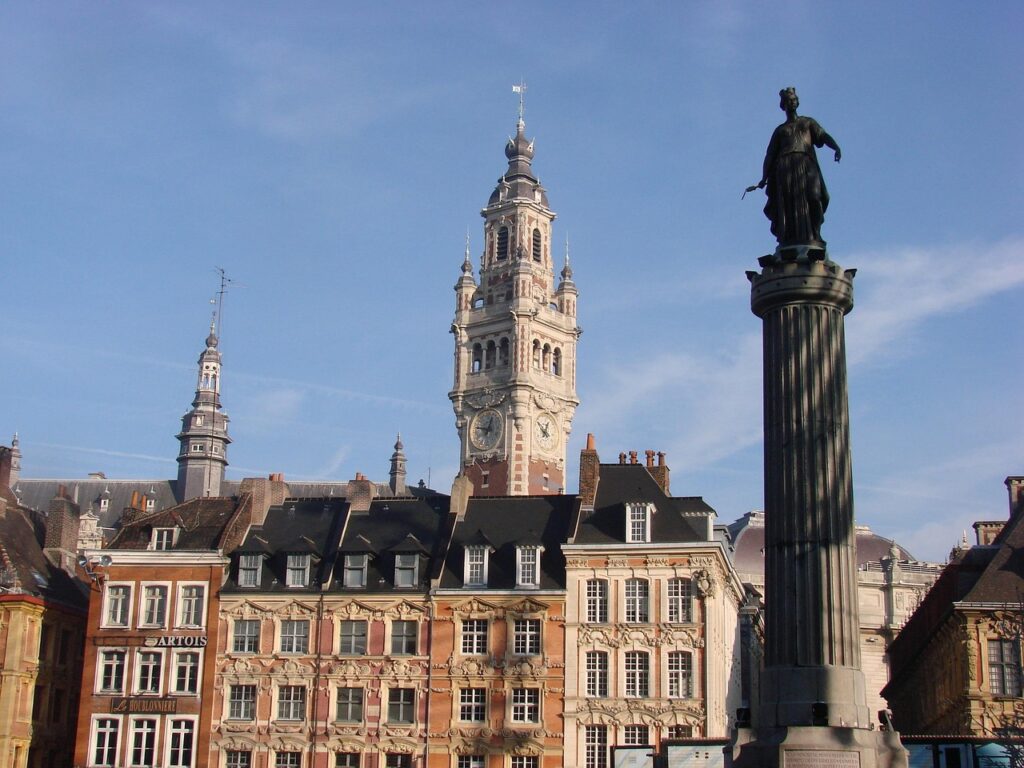
Four centuries of history and architecture are concentrated in and around the Grand Place. The La Voix du Nord building, the Vieille Bourse and the Théâtre du Nord bear the signatures of the builders of the 16ème, 17ème and 18ème neo-Flemish, romantic or classical, with touches of art-deco. On one side, this architectural melting pot is perpetuated on the Petite Place, where the Opera House and the Chamber of Commerce Belfry stand out. On the other side, after the Passage Rihour and a stop at the La Chicorée brasserie, the square and palace of the same name date back to the 15th century.ème century.
The estaminets and bouquinistes that weave their way between these listed buildings humanize these architecturally impressive esplanades. Lille is also a city that loves books. Between the 7,000m2 of Le Furet du Nord and the 65m2 of La Chouette, there are still some twenty delightful bookshops - quite a feat for a business on the verge of extinction.
A DECOMPLEXED CITY
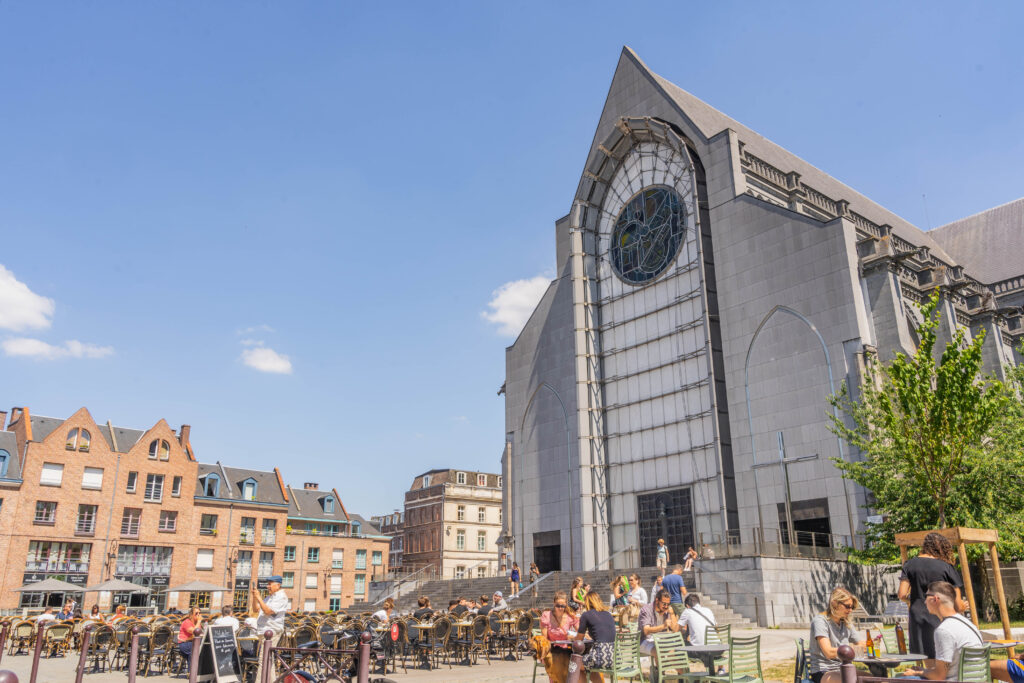
On the Petite Place, the belfry of the town hall, Europe's highest civilian campanile at 104 meters and 415 steps, or the elevator, offers a 360° view of the town and as far as the corons when the sky is clear. The audacious marriage of art-deco and neo-Flemish contrasts with the cathedral of Notre Dame de la Treille, erected a little further away, whose resolutely contemporary façade revives a former neo-Gothic chapel. Stained glass, marble, glass and bronzes on a metal structure outside. Mosaics illuminated by an immense steel chandelier inside. On the forecourt are terraces and bistros and, almost opposite, the Michelin-starred Pureté, which, like the religious edifice, displays its « uncomplicated ». The 145-year-long construction project has prompted this mix of medieval style and modernism, and illustrates rather well the general atmosphere of the city, which breathes in past centuries but resolutely celebrates contemporary and modern art.
A CITY OF HISTORY
Surrounding this historic nerve center, alleyways where the town's oldest dwellings, dating back to the 12th centuryème century, alternate with colorful brick buildings. The labyrinthine district invites you to get lost among the designer boutiques and tea rooms - there's always the top of the belfry to find your way back. Many artists and craftsmen have set up their studios on the ground floor of Rue des Vieux Murs, which leads to Place aux Oignons and Rue de la Monnaie. It's on this street, which leads to the train stations, that a discreet inner courtyard houses the Hospice Comtesse museum. Formerly a hospital housed within the castle walls of Countess Jeanne de Flandres to take in the destitute, the city's art and history museum hosts modern temporary exhibitions and a permanent gallery devoted to the Counts of Flanders and the Dukes of Burgundy - to help you understand the city.
A GOURMET CITY
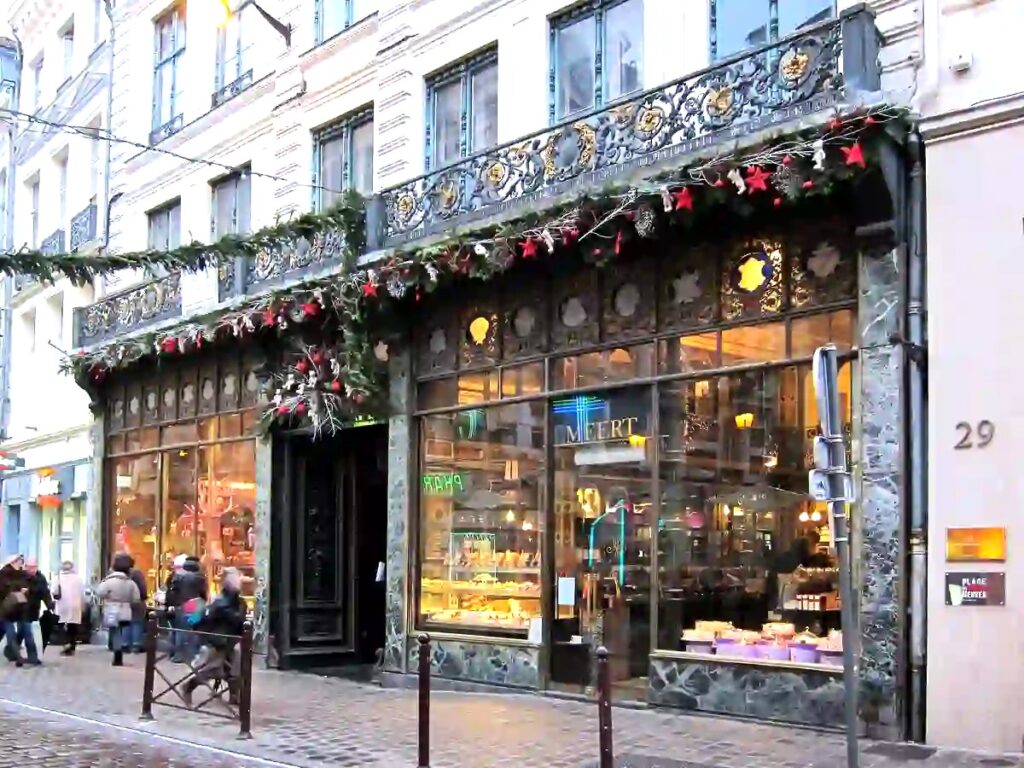
On the other side are the shopping districts of rue Esquermoise, rue Neuve and rue de Béthune, home to luxury shopping, trendy artists and an incredible number of food outlets: gourmet restaurants or bistros where food is also served, patisseries and bakeries where you can eat at small tables in front of the counter. Line up in front of Chez Meert (it's even better to go in, the address is listed) to taste the vanilla-filled waffles, General De Gaulle's favorite. Or in front of Merveilleux, to see if these Belgian delicacies are as good as they are here. Or in front of L'Impertinente, the « cabinet de mignonneries »specializing in giant cookies. If you have a few euros to spare, you can enter the Louis Vuitton boutique on rue des Chats Bossus. Otherwise, the exterior, listed as a Monument Historique, is well worth a visit.
Day two: the new town
Nothing is ever far away in Lille, which you can visit on foot. Other emblematic sites are worth a little detour from the center. The Palais des Beaux-Arts is France's second largest museum, after the Louvre. The Palais des Beaux-Arts is one of a number of cultural establishments that have designed their collections in such a way as to bring them to the fore in the age of time and digital technology. Here, the Middle Ages come to life, Flemish painters are discovered to contemporary music and Games of Thrones brings Saint George and his dragon up to date.
WAZEMMES, A LITTLE BOBO
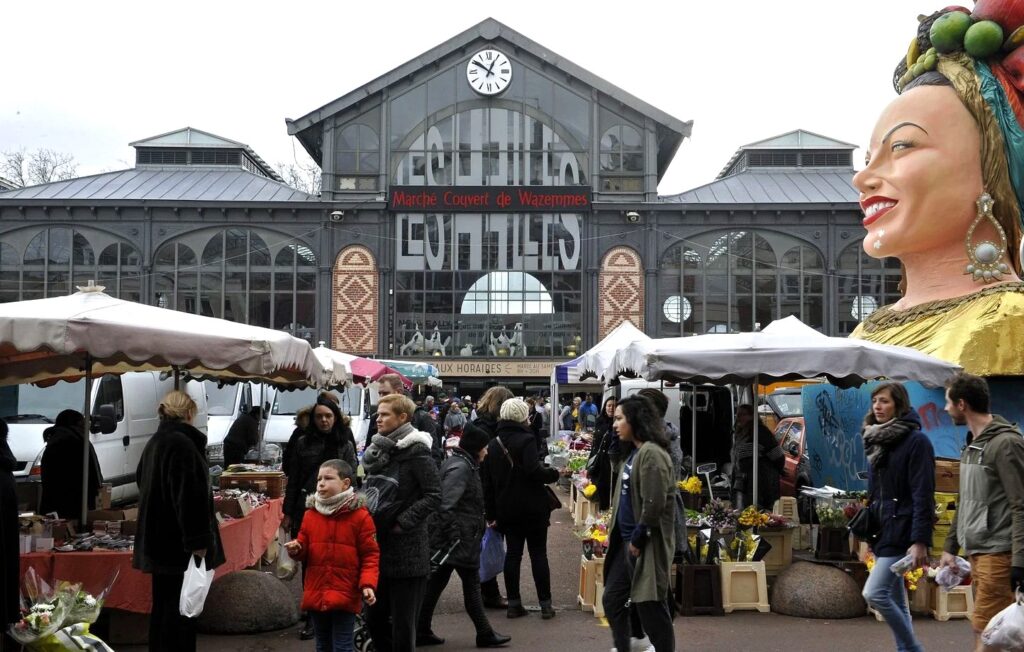
More folkloric and very trendy, the Wazemmes market is an experience. Around Les Halles, you go there on Tuesday, Thursday and Sunday mornings, to buy chicken, rusks, a parasol, oranges, clothes, a hairdryer, spices... before making up the world on the terrace of one of the bistros all around the stalls or watching a game of pétanque on Place de la Casquette. It's in this nicely offbeat, slightly bobo neighborhood that a church, Saint-Pierre-Saint-Paul, houses a fencing club in its crypt. If you consult a guidebook, you'll shine with this anecdote: d'Artagnan was fencing master in this hall before becoming governor of Lille.
EURALILLE
Heading back towards the stations, the Saint Sauveur site, still undergoing urban planning, offers artistic events, an urban farm and a strange monument to the carrier pigeons who died in the First World War. Then, the new Lille unveils the adventure playground of contemporary architects, including Jean Nouvel: Euralille. The new city can be easily spotted by looking up at its boot-shaped skyscraper, listed as one of the world's most beautiful skycrapers... An administrative center, shopping mall, apartment buildings and a business district strategically positioned between the two international train stations, it's said to be the city's future. The aim is to link it to the center, both intellectually and physically.
CULTURE AND LITTLE GREEN LUNGS
By repatriating cultural and festive events, Euralille is making progress in the field of cultural interest. The Tri Postal, a temple of contemporary art, boasts a highly attractive program that questions the entire international artistic sphere. All this year, it is accepting works from the Centre Pompidou in Paris, which is closing for renovation. The Pom Pom Pidou exhibition, on the occasion of Lille3000, heralds a series of striking compositions.
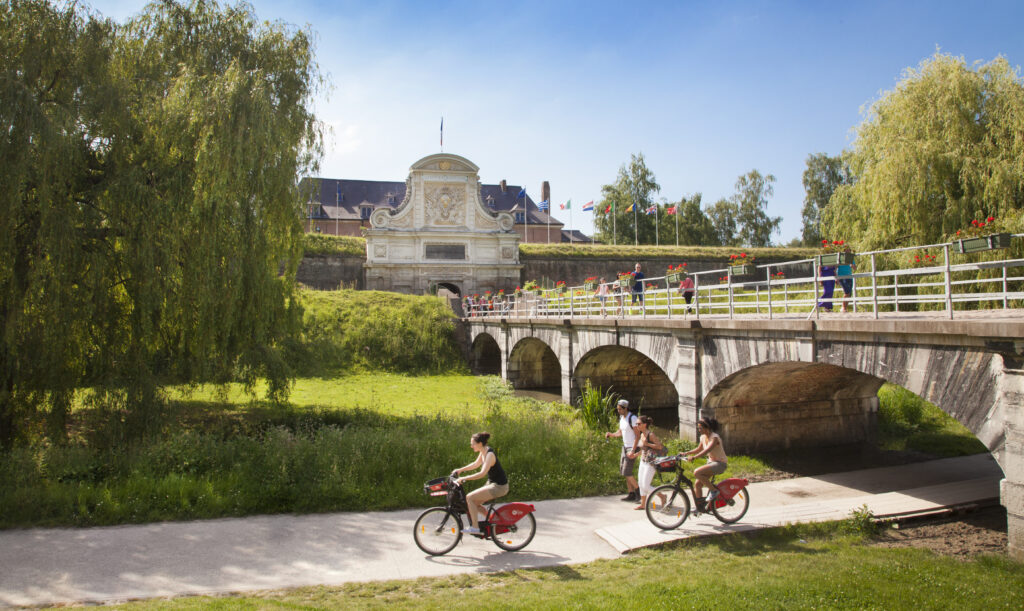
With the Parc Matisse, opposite Place Mitterrand whose statue assesses the project he had encouraged, Euralille physically links this less glamorous area to the city center by joining the Jardin Public de la Citadelle, a 110-hectare park famous for its open-air concerts. The city is dotted with a number of other green spaces, often designed to encourage artistic strolls. The Jardin des plantes and its Spring Festival, the Jardin de la paresse and the Jardin des géants. All the way to the forests which, on the horizon, dominate the slag heaps, also accessible by public transport. Faced with history, the people of Lille are said to be calling for more nature. Which also rhymes with future.
Day 3: Greater Lille
Some sites are worth a day away from the metropolis. Roubaix, Tourcoing and Lens are all accessible by train, streetcar or metro. You may have to walk a little, but that's one of the advantages of these escapades: you don't have to take a car.
THE VILLA CAVROIS
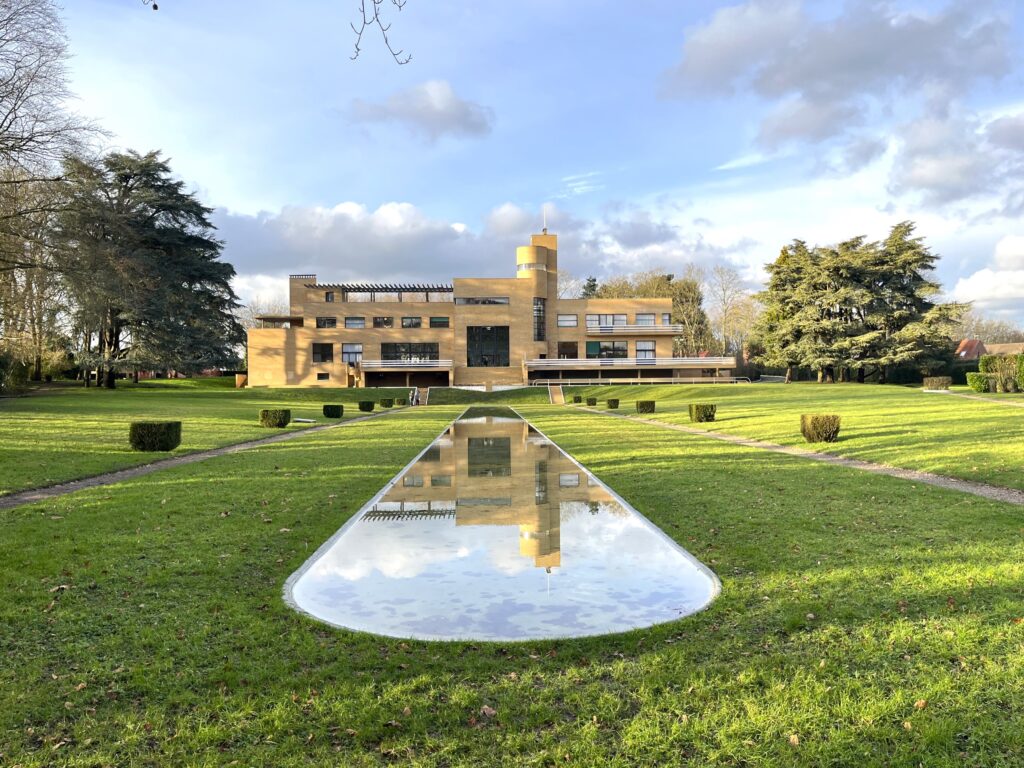
It was an emblem of the architectural avant-garde of the 1930s. It was used as a German barracks during the war, then abandoned, looted and squatted. Not all plans and models have been preserved, furniture and objects have been scattered around the world, and period photographs are rare. Its restoration is a feat of exceptional detail, right down to the boilers and kitchen chairs. So much so, in fact, that you can't tell the difference between the original parts that have been restored, the many replicas made using the original materials and know-how, the identical renovations and the few original parts that are still being recovered.
The exterior is not left out, with precise details of the facade or garden, the swimming pool and the cellars, where a material library helps to understand the choice and architectural impact of the materials used - steel, reinforced concrete and briquettes for the exterior, parquet flooring, panelling, marble or mirrors for the interior. The play of light, the bay windows linking interior and exterior spaces, the solids and voids and the pure lines express this modern art that strips away the art deco that was in vogue at the time. It's a marvelous piece of art, sometimes invested by contemporary artists, sculptors and photographers.
THE ROUBAIX SWIMMING POOL
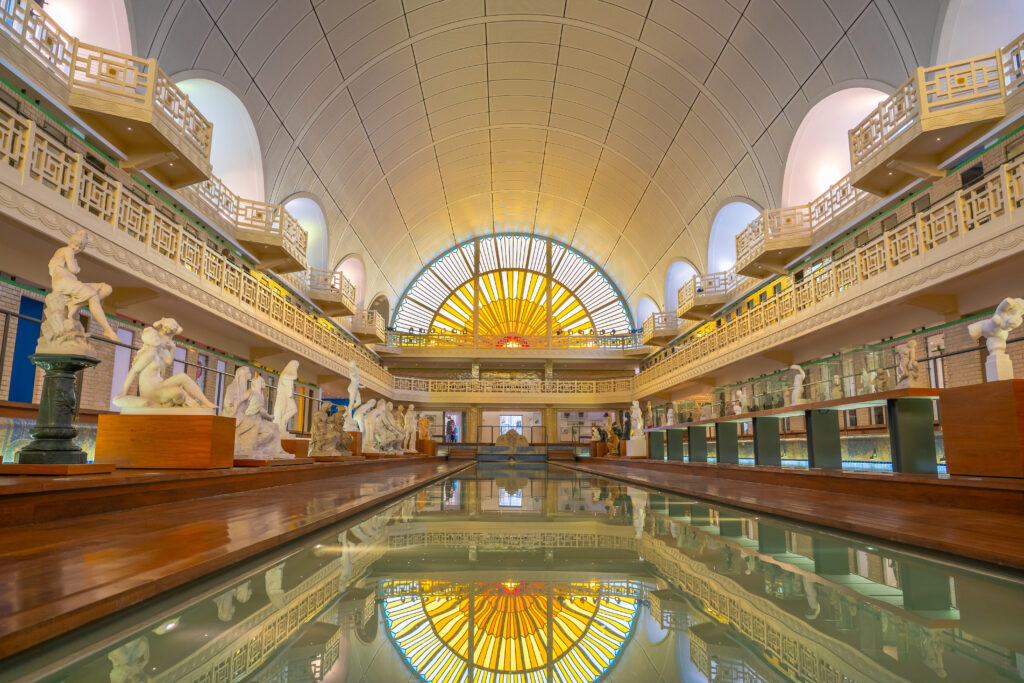
Municipal, it has become iconic for its beautifully restored pool and cabins, which are now exhibition spaces. This is the Musée d'art et d'industrie André-Diligent. A contemporary of the Villa Cavrois, it was one of the few places where all social classes could meet, almost in their simplest clothes. People not only went swimming, but also washed up and sometimes held debates in the steam baths or hair and pedicure salons.
Art-deco oozes from the walls and through the booths, and nostalgia can't resist the concerts, permanent collections and more contemporary exhibitions regularly scheduled here. The Louvre holds workshops here, and Meert offers its pastries in a tea room.
Close by, Le Grand Bassin is a collective of designers who take advantage of La Piscine's proximity to exhibit their works, pieces, clothes, furniture and books. Several times a year, a jolly garage sale is held, providing an opportunity to acquire items at lower prices.
LE LOUVRE-LENS
It's a little further away, but the metro and train take less than an hour. The second Louvre, redesigned last year, focuses on modern, interactive initiatives.
New: the Galerie du Temps now features 250 new works, bringing together 5,000 years of art and history chronologically rather than geographically. The literal and figurative highlighting of pieces from the Louvre and other museums, information (educational sheets, digital aids) are accessible to all audiences, and tours in sign language with a human, not just on a smartphone, are organized. Above all, admission is free for all.
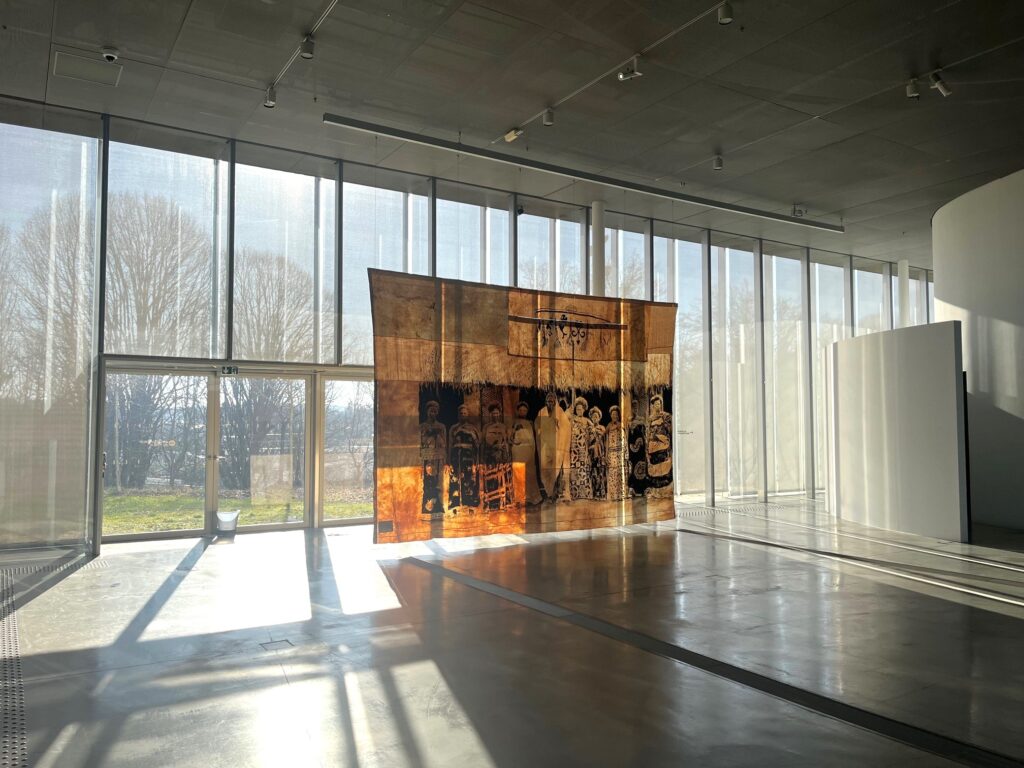
Until June, the Pavillon de Verre is hosting works by artist Roméo Mivekannin. His superb reinterpretations, on huge unframed canvases, of a number of major works - such as Le Radeau de la Méduse (The Raft of the Medusa) - call attention to the presence of black people in the history of art. Almost indispensable.
For 6 months
All these visits and cultural events will be enhanced by the 7ème edition of Lille3000, which will transform the city into a huge artistic, fun and dynamic stage from April 26 to November 9, 2025.
LILLE3000 FIESTA
The major event continues its exploration of the meanders of contemporary art, choosing this year to respond to today's blurred world with a call to collective action: FIESTA turns its back on individualism and the prevailing gloom.
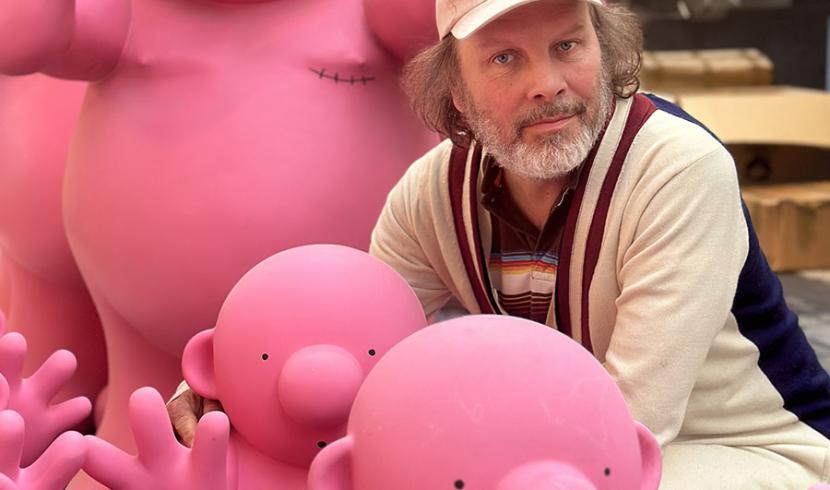
FIESTA is about celebration in all its forms, together, encounters, interactive creations, everything that culture can achieve to reweave social bonds. Neighborhood projects, family parades, literary encounters, international events, folk festivals, sounds and lights, access for all, programs shared by all, private, institutional, intimate halls, museums, theaters, cinema, opera, schools. It promises to be both sweet and crazy, with Philippe Katerine as the human mascot, who will transform his Monsieur Rose (a lucky charm made of modeling clay) into giant inflatable or sculpted sculptures. Don't miss out on this great bath of festivities and culture!
Vive le mignonisme! From April 26 to November 9, all over the city.
Find out more:
It took us 34 minutes by TGV from Brussels at an unbeatable price. All other major Belgian cities are less than two hours from Lille. On site, a very good public transport network makes for a real walking city trip.
A 24h or 72h CITY PASS with or without public transport - train, bus, metro, regional trains - is a winner every time. 27 activities and visits within the city limits (la Piscine or the MUBA in Tourcoing) for the former, and with 11 additional regional sites for the latter (Louvre-Lens, Arras, Dunkerque or Douai). A city tour and guided tour of Old Lille are included. Please note that many museums are closed on Tuesdays.
