
From the tip of Cap Bon to the Kerkennah Islands, from the mountains of Ain Draham to the olive groves of the Sahel and the palm groves of the South, Tunisia reveals another facet of its identity: that of its women. Who cultivate, transform, and enhance the riches of a sun-drenched land. We met five of them, five voices that tell the story of their country through traditions, gestures repeated a thousand times, and a wealth of know-how. Through their products, workshops, or guesthouses, they invite you to discover an intimate, authentic Tunisia rooted in traditions that span generations.
The taste of mountains and forests
Aïn Draham – Noura Nouioui (Green Village)
Deeply committed to promoting its region, Noura Nouioui has shaped, in the region of Ain Draham, a universe where the local heritage is experienced as much as it is tasted. Through the cooperative Blessed Fountains and space Green Village, she envisioned a place where «agriculture, local food processing, ecotourism and culinary experiences» meet to offer visitors an authentic immersion.
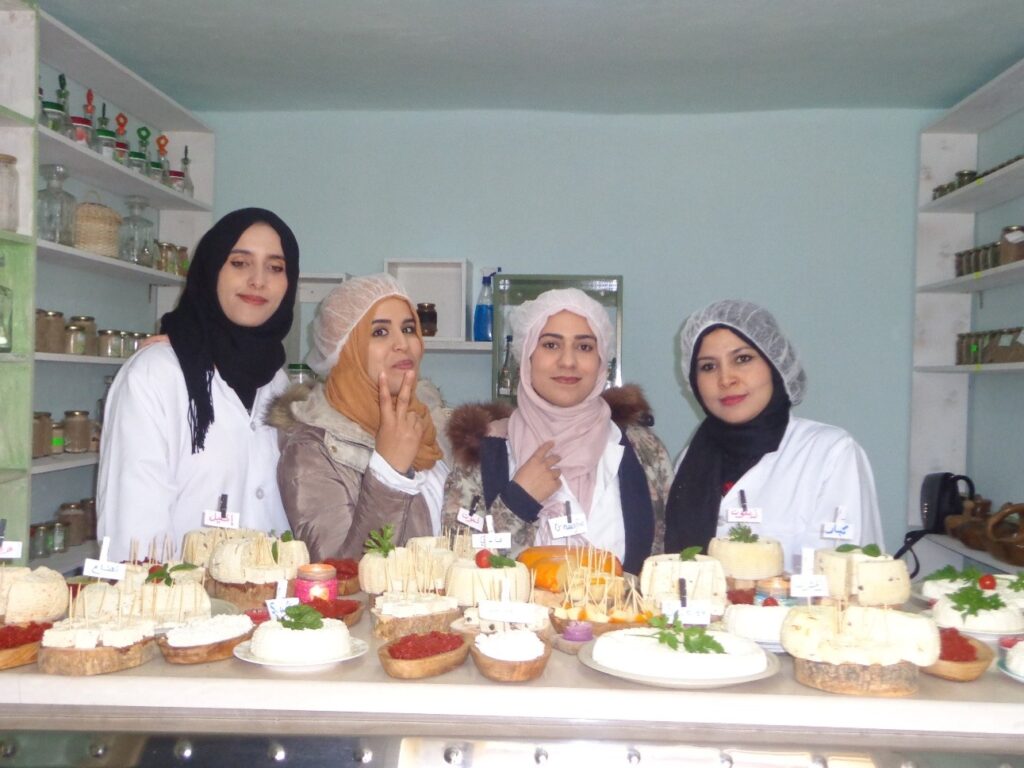
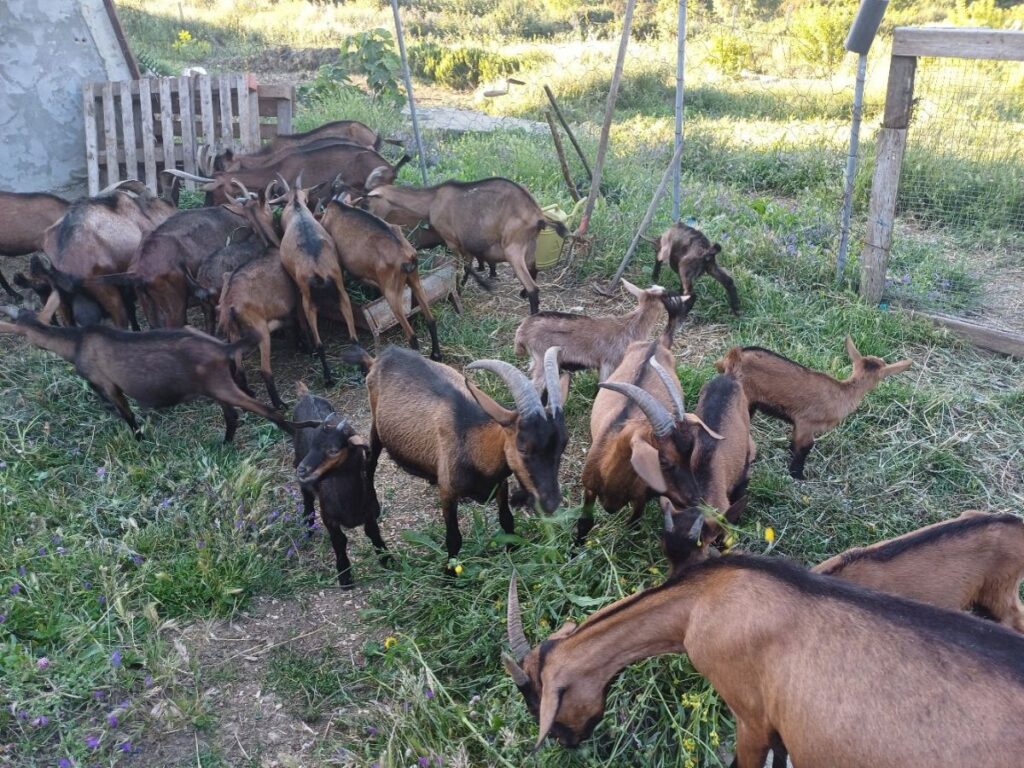
His specialty is goat cheese, goes far beyond the scope of the product. It is a living heritage, a passed-down gesture. For her, «goat farming is part of the rural heritage.» Transforming local milk into cheese has become a way to preserve know-how and highlight the work of female farmers. «We also work with olive oil, local produce, aromatic and medicinal plants, and products from our agriculture, she adds. We always try to preserve the authentic taste of the products while respecting hygiene, quality, and food safety rules.»
In Green Village, travelers do not just taste : they participate. Cheese making, cooking with local products, discovering the steps and techniques... «They can discover the different manufacturing steps, take part in certain preparations, and above all, understand the history behind the product. For us, passing on this know-how is just as important as marketing the cheese. »
The women's cooperative has profoundly transformed the lives of the female inhabitants, becoming a space of solidarity, training, and economic empowerment. And if Noura's cheeses have such a singular identity, it is thanks to the mountains of Aïn Draham: a terroir where Goats feed on wild plants, giving the milk unique aromas. «An Aïn Draham goat cheese is not simply a food product,» she says, «it tells the story of a region.» A region that visitors learn to taste, understand... and love.
https://larouteculinairedetunisie.info/atelier-de-fromage-de-chevre-a-green-village/?print=print
Leaving the dense forests of the Northwest, the route descends toward the eastern coast and the spicy land of the Cap Bon peninsula.
At the source of Tunisian fire
Cap Bon – Fatma Hrigua
The creation of the «Dar Omi Daouda» workshop has its origins in «a story of love and nostalgia,» confides Fatma Hrigua. A return to roots, to those gestures and flavors that make Cap Bon one of the iconic cradles of harissa. «I found the scents of my childhood and the soul of my country in her spices,» she says, recalling those years spent far from Tunisia that pushed her to create a signature that reflects who she is, «from my soul to yours.».
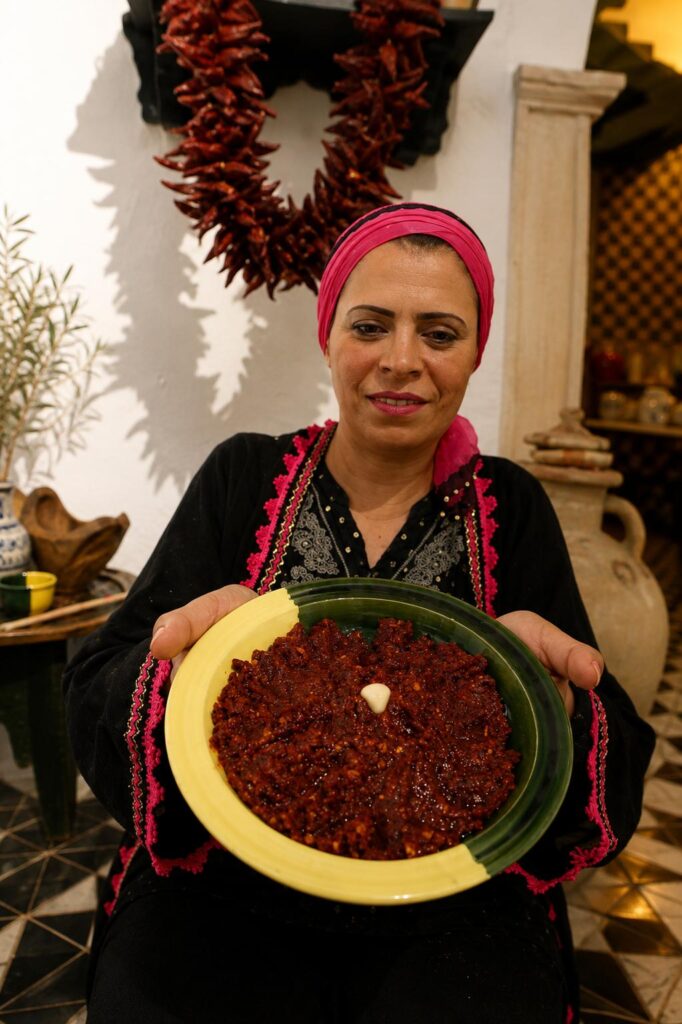
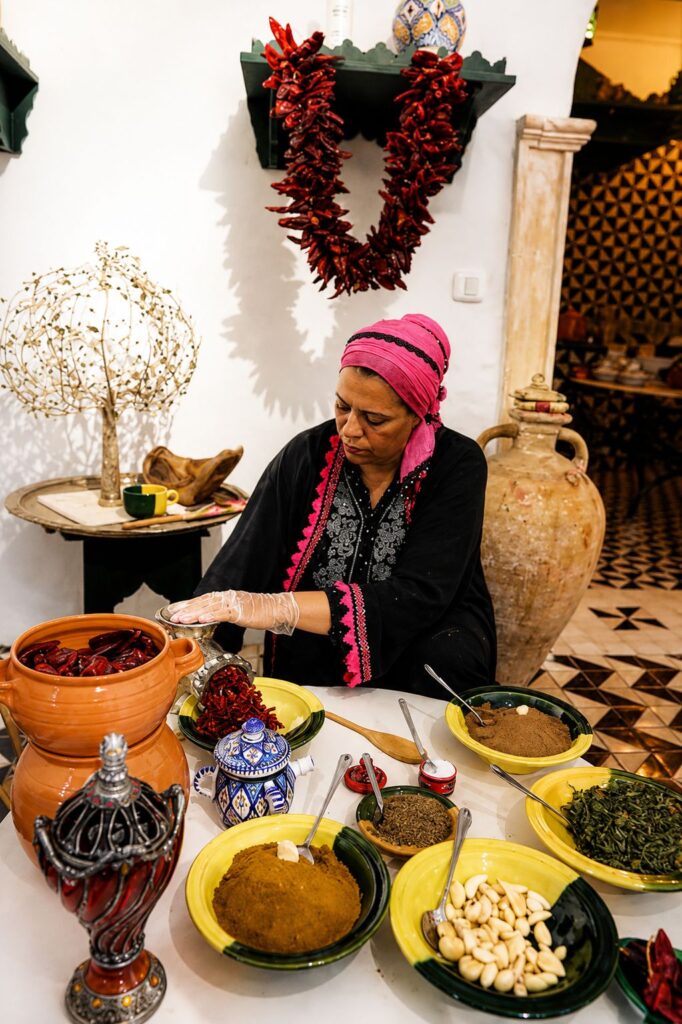
His expertise is expressed through the creation of different varieties of Tunisian harissa, prepared according to the traditional method passed down by her mother Daouda. Her authentic spice blends—enhancing couscous, pasta, rice, mechoui salads, or barley chorba—and her compositions inspired by Tunisia's culinary heritage perpetuate techniques inherited from a long history.
In his harissa workshops and its cooking class, she opens her doors to foreign visitors, revealing to them the secrets, gestures, and authentic flavors of Tunisia. Working with a product inscribed in the intangible heritage of humanity is for her a profoundly identity-driven act: «Harissa represents much more than a product: it represents my attachment to my land and my love for Tunisia. Working with it means returning to our roots and our authenticity. I prepare it with passion and from the heart, because I am convinced that love and a sense of belonging can be felt in the quality of the product.»
Each preparation awakens in her childhood memories, scenes of family cooking, and gestures repeated with tenderness and precision. Today, Fatma dreams of evolving harissa while preserving its character, bringing her personal touch to it, and making the flavors of Nabeul shine throughout Tunisia and beyond its borders. Because for Fatma Hrigua, «harissa is much more than a condiment: it is a part of our history and our Tunisian identity».
https://www.facebook.com/profile.php?id=100088701734182
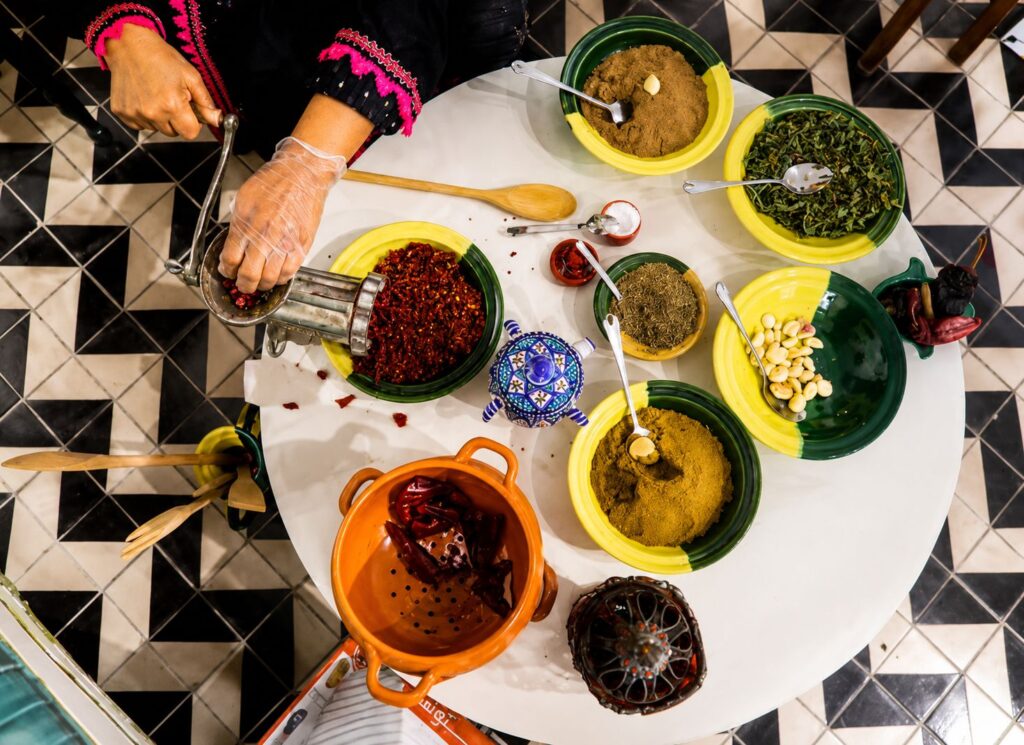
After the chili peppers, the spices, and the heat of Cape Bon, let us continue this culinary journey toward the bright plains of the Sahel, where olive trees stretch as far as the eye can see.
Women's liquid gold
Center & Sahel – Malek Labidi
«My work is based on a deep conviction: what is not written disappears. What is not filmed fades away. What is not told is lost.» Author, documentary producer and head chef, Malek Labidi became known to the general public through hosting various culinary shows on Tunisian television and radio. In order to document this living and fragile culinary heritage, she explores the regions, olive groves, markets, and kitchens. Her works, including the series Tunisia at Table, winner of the Gourmand World Cookbook Awards, and Tunisian Liquid Gold, dedicated to olive oil, are part of this desire to build a memory and give a voice to producers, indigenous varieties, and gestures passed down for generations.
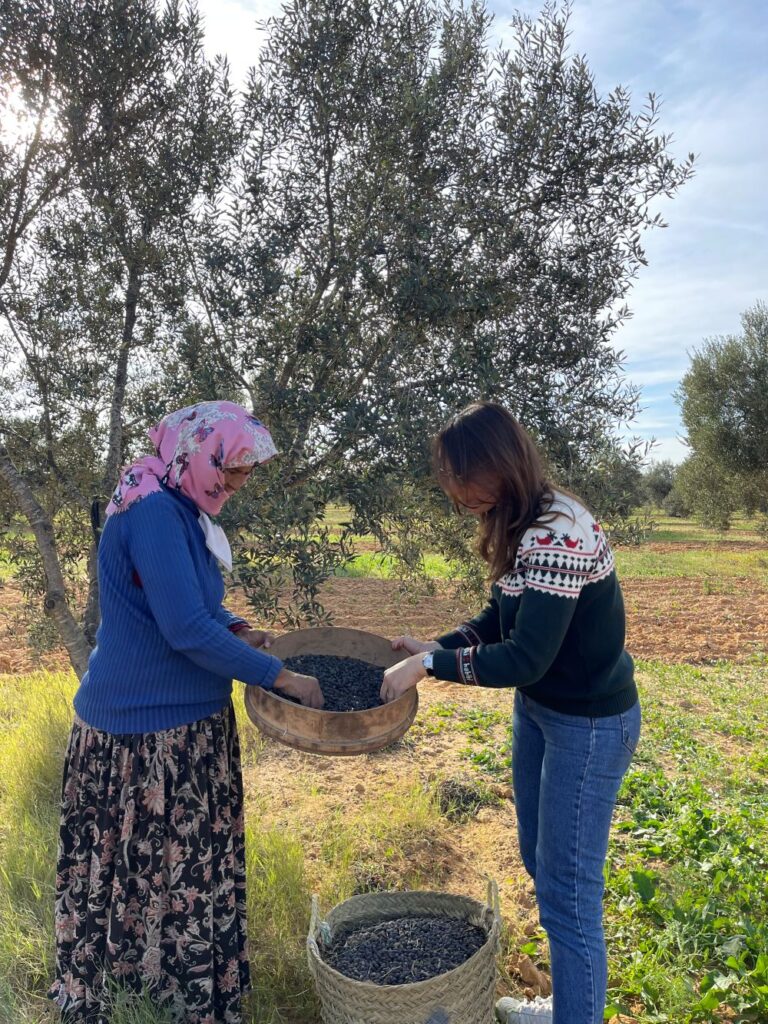
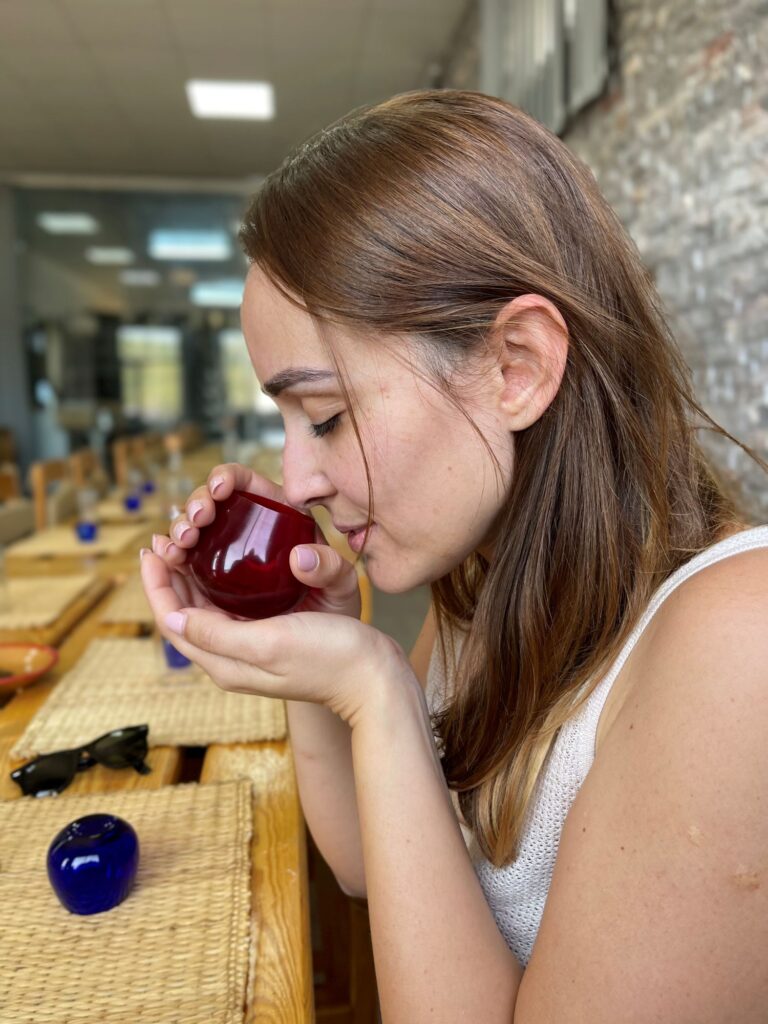
Her cuisine is based on a sensory interpretation of regional identities, where each recipe becomes a geography, a story, a way of life. At the heart of this approach is olive oil, which she considers to be a true language. «You do not cook with olive oil, you converse with it», she summarizes.
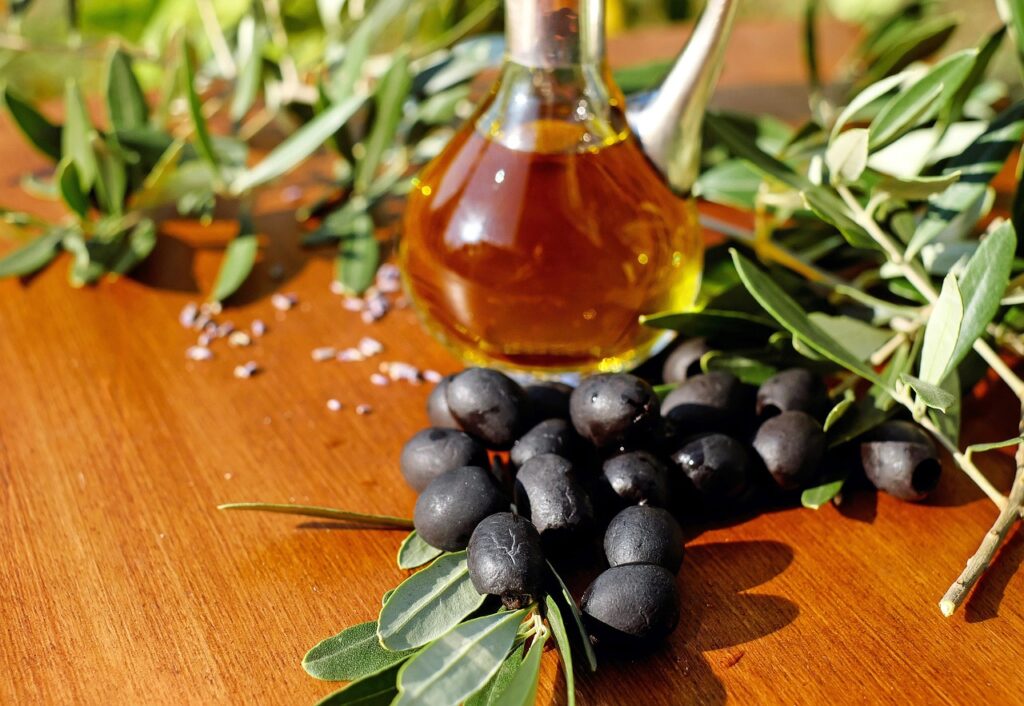
If the Chemlali accounting for about 80 % of national production, it remains little known internationally, overshadowed by Mediterranean stars. «It is precisely this paradox that struck me and made me want to do it justice. Its uniqueness is primarily sensory. Close your eyes: it is a ripe and sweet fruitiness, a slight bitterness like a confidence, a round and enveloping finish that lingers long in the mouth without ever being overpowering.". She doesn’t overpower dishes – she accompanies them, she reveals them, she elevates them with remarkable discretion. But what also fascinates me is its generosity and complexity. There is not just a single Chemlali taste, but a multitude of nuances depending on where the tree is planted, the soil, the sunlight... Which makes this oil unique and very interesting.»
«the excellence of Tunisian oil is born from a magnificent paradox, adds Malek Labidi: a millennial agronomic tradition that is, in reality, the sustainability model the most accomplished possible. In Tunisia, harvesting is still done entirely by hand. In certain regions, the olive trees are spaced twenty to twenty-five meters apart, allowing the earth to breathe, draw nourishment, and regenerate. Vast olive groves grow rain-fed, without irrigation. And this is not a recent choice; it is a continuity. The presence of the olive tree in Tunisia, and even of the oleaster, its wild ancestor, dates back to before the Carthaginian period. We are talking about a relationship between a people and a tree that predates written history. This is where tradition lies. Deep, rooted, enduring without ever having needed that word. But from the moment the olive is harvested, modernity enters the scene with equal self-evidence. State-of-the-art oil mills, ultra-modern transport and preservation systems, rigorous biochemical analyses—everything is done to ensure that nothing is lost between the fruit and the bottle.»
In Tunisia, women have always been at the heart of olive-growing culture – from harvesting to the transfer of knowledge. Today, they are also taking the reins of promotion, storytelling, and export. An essential evolution for a product that suffers from an image deficit, but never a quality deficit. Entrepreneurs, researchers, tasters, or communicators, «they tell the story, they protect it, they carry the narrative.» In this movement, Malek Labidi sees her role clearly, that of a transmitter: «pass on the history, build the narrative, and give Tunisian olive oil the place it deserves on the world's tables.»
https://www.instagram.com/maleklabidi/?hl=fr
The tour now sets sail for the open sea, where the sea shapes the customs, flavors, and traditions: the Kerkennah archipelago.
The living memory of Kerkennah
Kerkennah – Rahma Ben Hamida
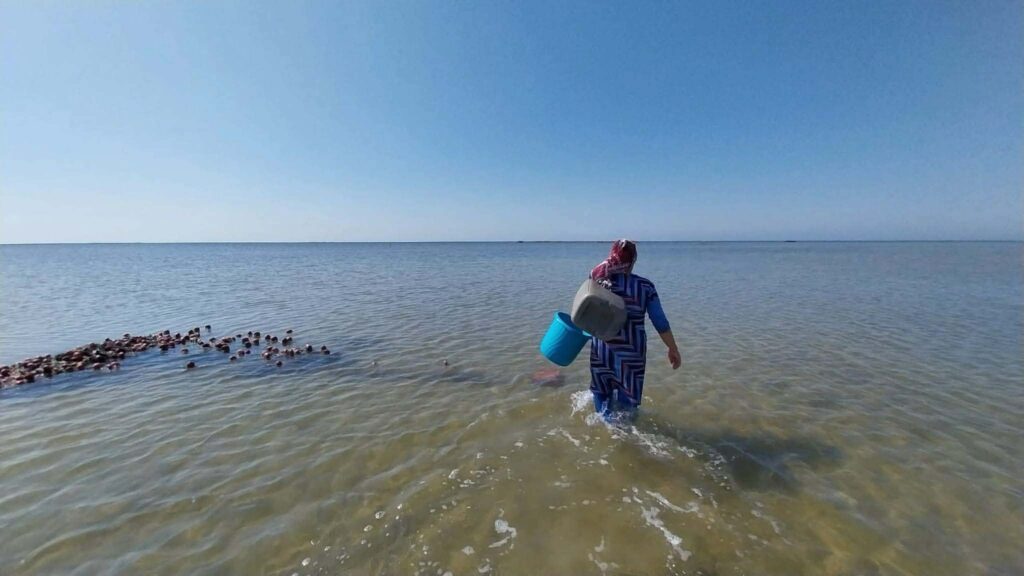
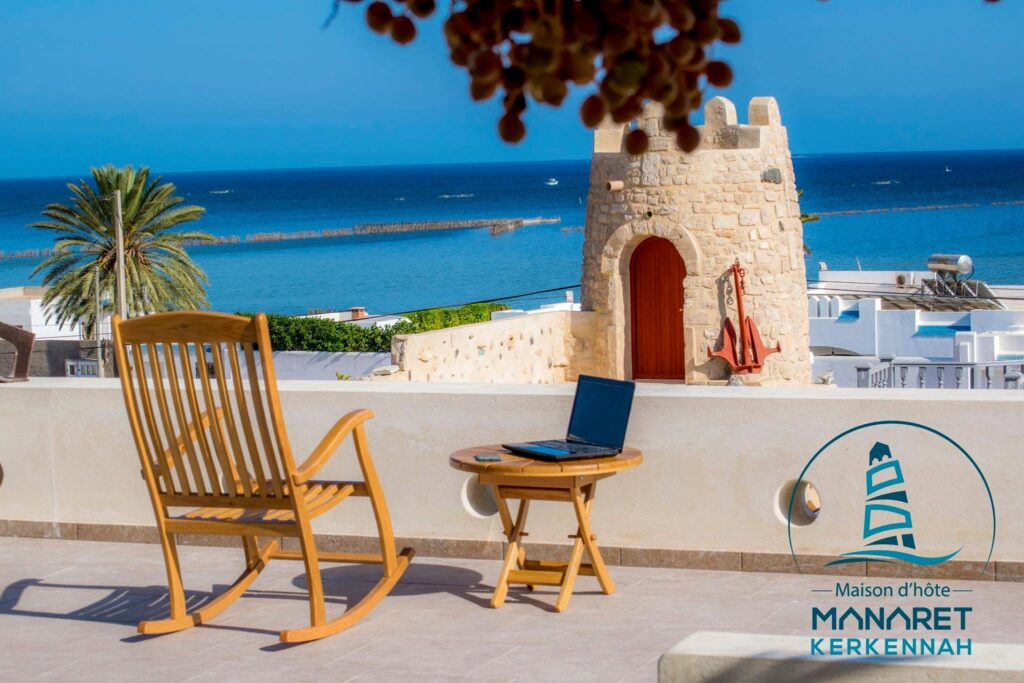
Retired from education, Rahma Ben Hamida never stopped transmitting. Today, it is through the land, the sea, and hospitality that she continues this vocation. Based in the Kerkennah archipelago, she divides her time between marine and terrestrial agriculture, and the guest house management, Manaret Kerkennah, a place where the island soul tells its story in every detail.
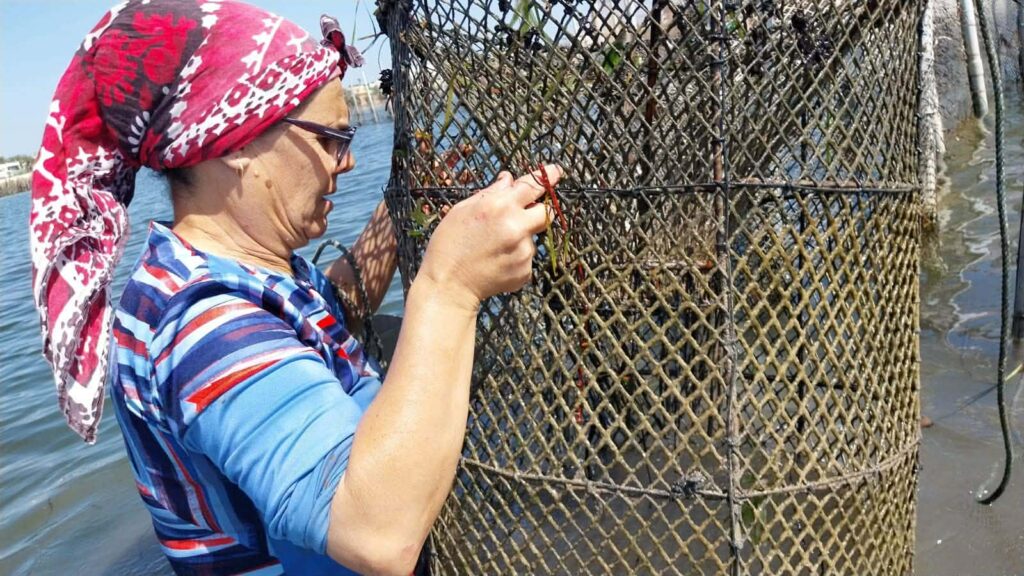
Rahma defines her specialty without hesitation: «above all, Kerkennah cuisine.» A cuisine shaped by the sea, by the products the island offers generously—octopus, cuttlefish, shrimp, fish. «They hold an essential place in Kerkennah's cuisine,» she specifies. For her, cooking these traditional dishes means preserving a heritage, passing on a way of life, an intimate relationship between the inhabitants and their island environment.
When she evokes the octopus fishing, Rahma speaks of a world where gestures have crossed the centuries. She describes the charfia, this fixed fishery system «characteristic of the archipelago,» and the ancient techniques that attracted octopus by offering it shelter. «We used the kernif, a part of the palm tree,» she says, or even stones hollowed out by hand to create cavities. Today, these stones have given way to the bottle and to the draïna, «a sort of small terracotta jar.» These practices, she confides, «bear witness to a" traditional know-how and first of all very close relationship between the inhabitants of Kerkennah and the sea ».
Her guest house is a living tribute to island identity. «Manaret Kerkennah is above all a traditional Kerkennian house,» insists Rahma. One finds there skiff, the typical entrance of old residences, but also objects, photos, and traces of the civilizations that have passed through the archipelago. Fishing traditions, customs, wedding celebrations, and scenes of daily life are gathered there like an intimate museum. «My wish is for the visitor to truly feel the soul of Kerkennah,» she confides, «to understand its history, its traditions, and the way its inhabitants live.».
Her commitment to bird conservation stems from a deep sensitivity to nature. «I started by participating in an environmental club,» she recalls, before helping to create the’Association of Friends of Birds. She noted that birds and their habitats were often «driven away or disturbed, sometimes simply out of ignorance.» Drawing on her background in education, Rahma made it a point to raise awareness among children, who, out of curiosity, «may approach nests, touch the birds or their environment without realizing how fragile they are.» For her, protecting birds also means passing on a perspective, a level of attentiveness, and respect.
After the island stage of Kerkennah, our route heads south, towards the palm groves where Deglet Nour grows, another renowned facet of the Tunisian terroir.
Deglet Nour, between heritage and contemporary elegance
Tunisian South – Badiaa Frikha (LINA Dates & Delights)
Badiaa Frikha is the co-founder of LINA Dates & Delights, a artisanal house born in Tunis of a personal and family turning point. After working alongside her father in the family business, the birth of her son pushed her to rethink her relationship with the composition of the products we consume. «Becoming a mother made me much more attentive to food, the quality of ingredients, and more natural products,» she explains.
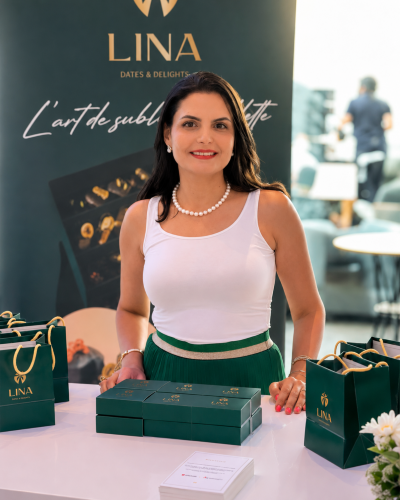
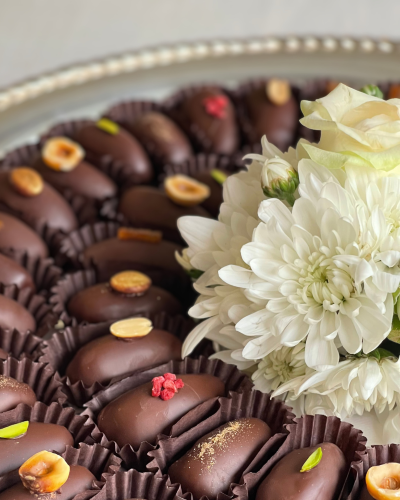
It is in this spirit that LINA was born, a brand dedicated to Tunisian Deglet Nour, «the queen of dates», which she wants to showcase in a more contemporary light. «Above all, we try to respect the product we have in our hands. Deglet Nour naturally possesses a very distinct smoothness, texture, and aromatic richness. Our work is more about supporting and highlighting it than transforming it. We wanted to preserve what makes up its identity while moving it away from its traditional presentation...»
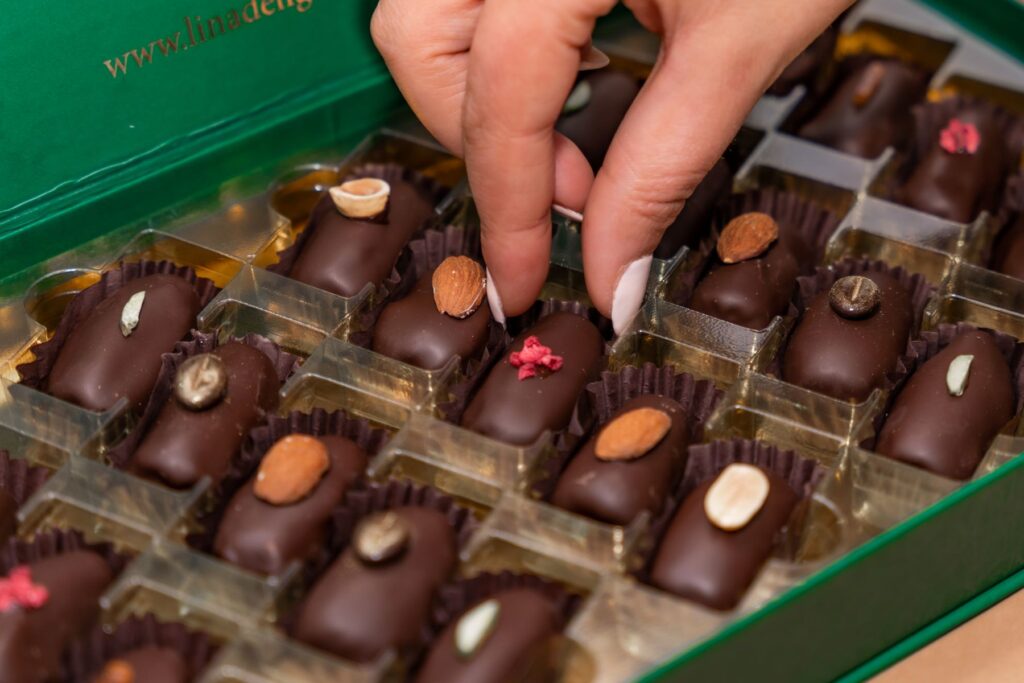
«My relationship with culinary craftsmanship comes rather from my mother. I grew up watching her test her recipes, take care with her preparations, and make others happy with what she made. Looking back, I think she passed on something of that to me passion for handmade.In the workshop set up in Tunis, the dates from southern Tunisia are selected one by one, pitted, filled, and coated by hand, with creations combining hazelnut praline, raspberry confit, pistachio-kunafa, citrus fruits or spices, and then wrapped in Valrhona dark chocolate.
Badiaa admits it, the idea is to offer a rather elegant and refined product, but never ostentatious... LINA reconciles innovation and nature while working in small batches, without preservatives, using carefully selected ingredients and packaging made by local artisans.
«We love the idea that a traveler who leaves with one of our gift boxes is taking away not just dates, but a little bit of Tunisia with them,» she concludes.
All theseflavors and products can be enjoyed in the houses mentioned in the article but also throughout Tunisia, from fine dining restaurants to street food as well as in most hotels.
Find all the information on the Culinary Route of Tunisia and many other producers at: https://larouteculinairedetunisie.info.
