Bordered by snow-capped volcanoes, cracked by drought, fluorescently colored by its mineral lagoons and salt lakes, the Atacama is a living hell but an aesthetic masterpiece. In the north of Chile, the driest desert on the planet is also a strange mineral universe that displays the colors of the materials spewed out by its volcanoes and subjected to the whims of an extreme climate. An ultra-trendy destination that we suggest you explore to the rhythm of its raw elements..
By Eric Vancleynenbreugel
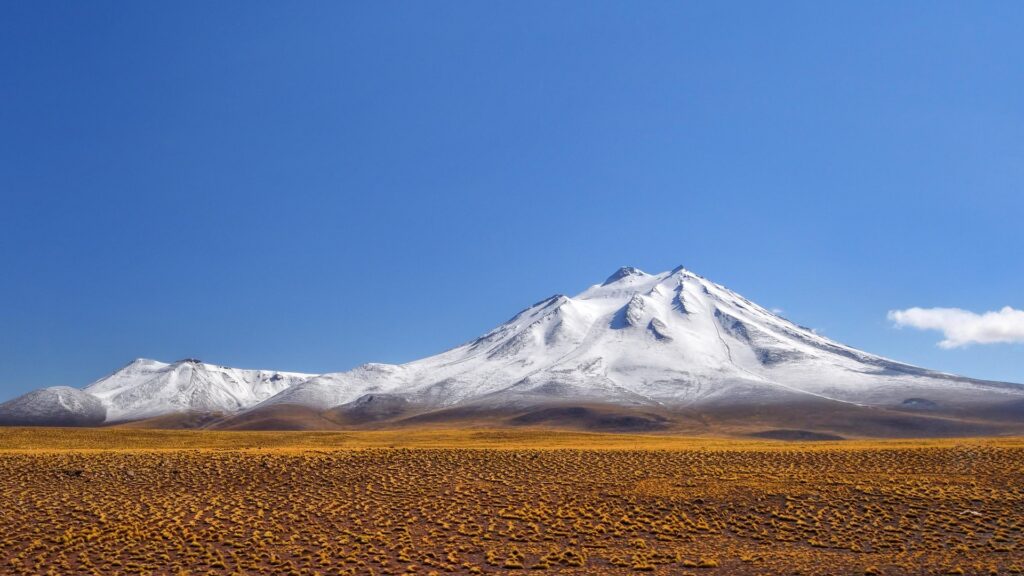
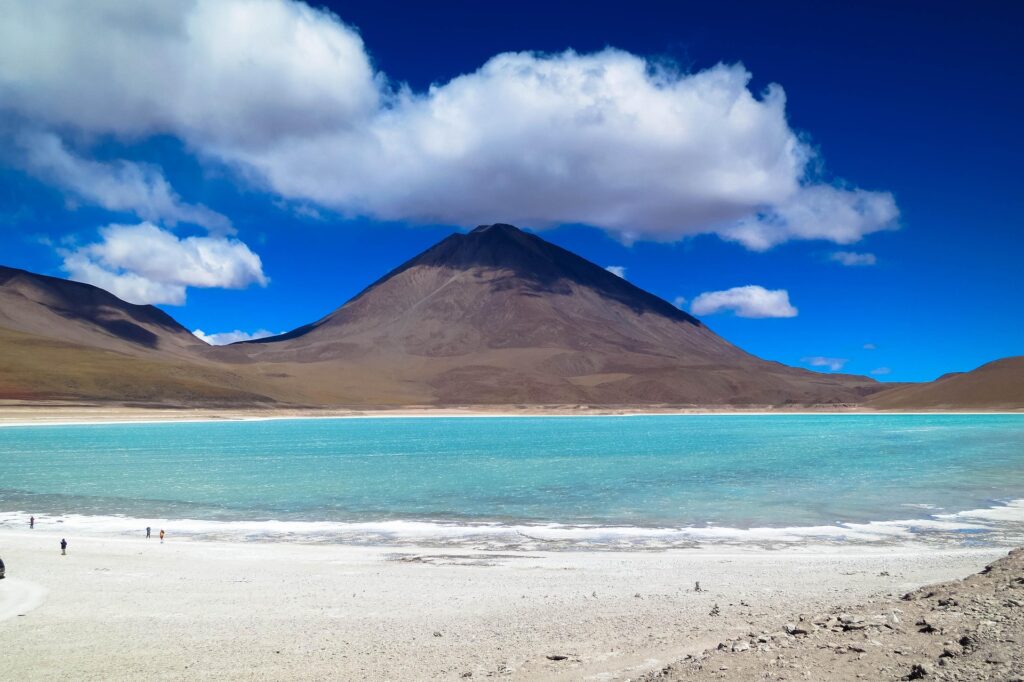
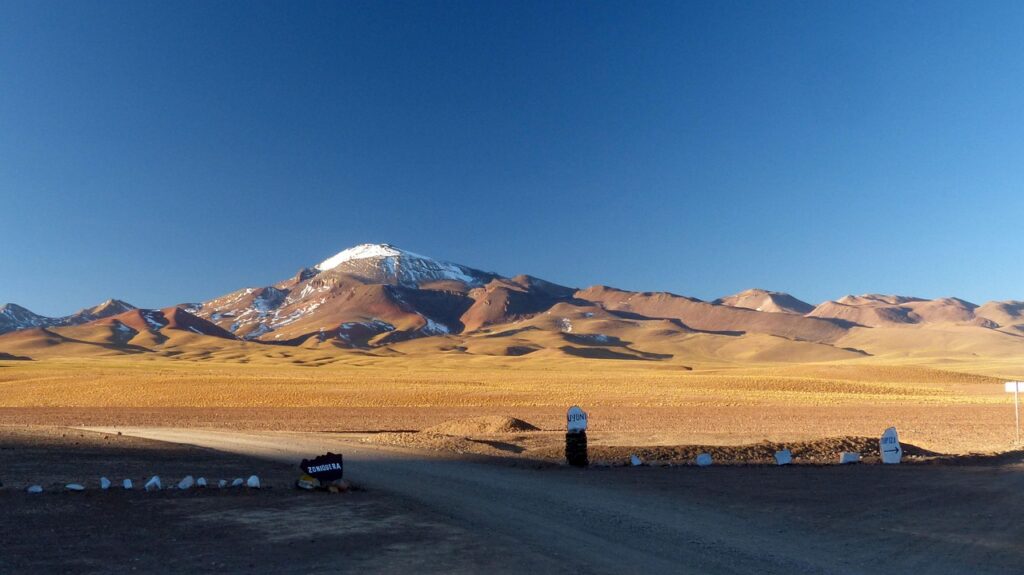
Perfectly conical, peaking at almost 6,000 metres, the Licancabur volcano marks the border between Bolivia and Chile. At its foot lies the Atacama: 1,000 kilometers long. The driest desert on the planet. Very little life, almost no wildlife, and even fewer plants. In some areas, it may not rain for several years, and even the youngest children are surprised when they see their first shower! Some remote weather stations have never even recorded precipitation!
San Pedro de Atacama, an oasis in the middle of nowhere, owes its existence to a river from the Andes that brings it back to life. With its unlikely shops, dusty alleyways, mud houses and immaculate cactus-timbered church straight out of a Western, the village retains a strong character, so much so that Chile has declared it a National Monument.
This old-style atmosphere is the result of the Atacameño community's determination not to disfigure San Pedro. Hence the restrictive rules, such as supplying grocery stores by handcart. Surprisingly, bars are not allowed. So, to have a drink, you have to sit down in a restaurant and order some empanadas, for example. And while some restaurants offer live music, it all has to stop at midnight. Dancing is also out of the question, on pain of a hefty fine! These laws have been enacted to prevent excesses, especially when minors descend on the city. But the local youth have found a solution: since San Pedro has to remain calm, some organize clandestine parties in the middle of the desert...
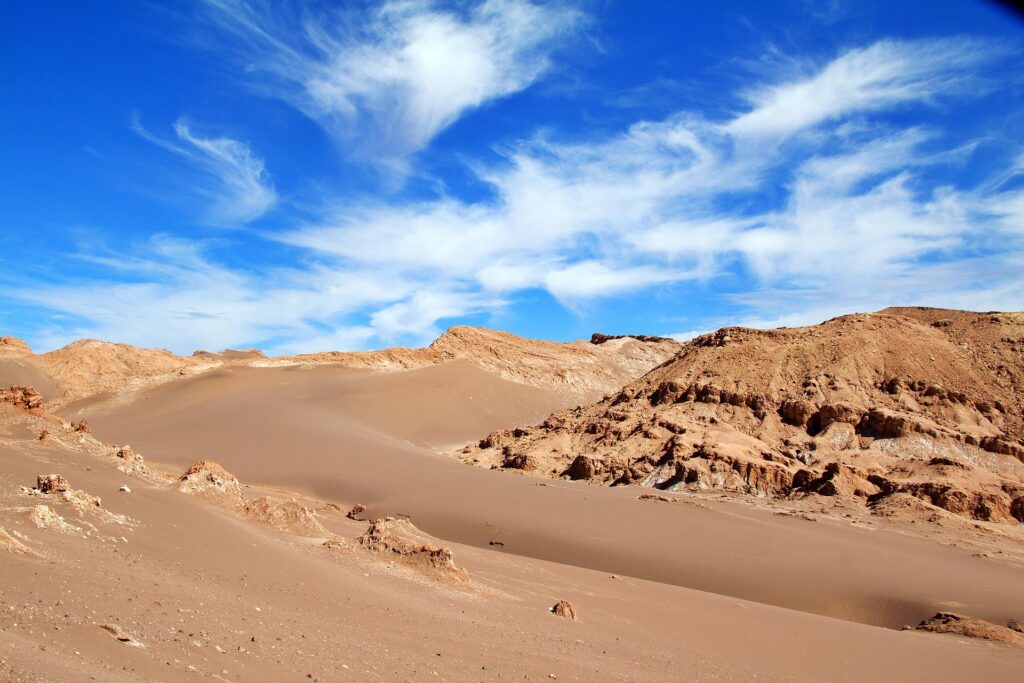
Sand
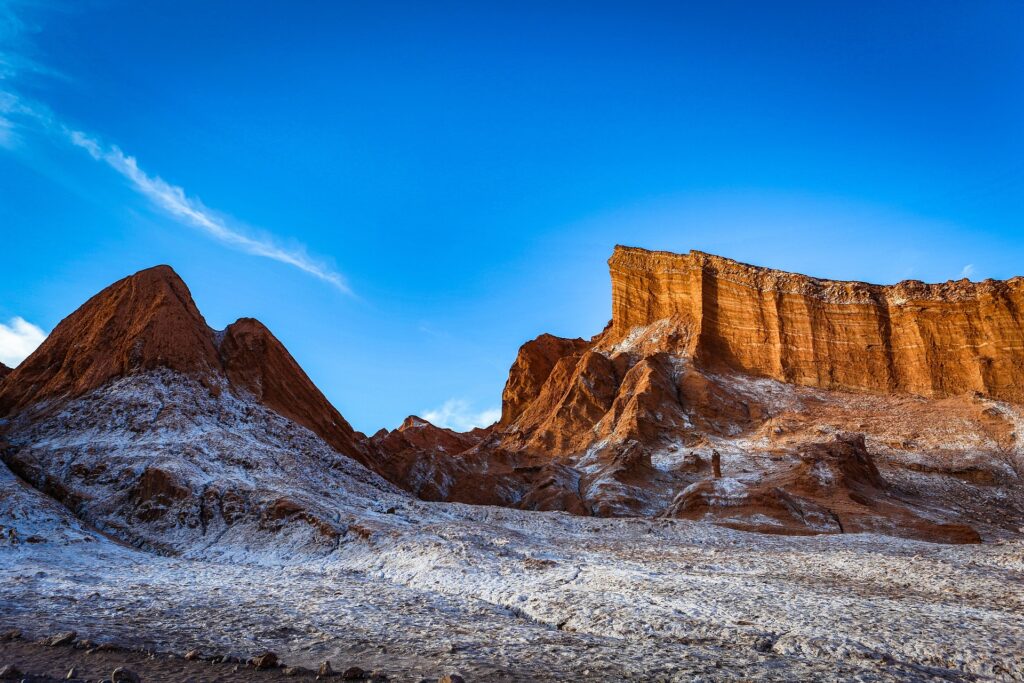
To the west of San Pedro, the dreaded Cordillera del Sal (Salt Range) marks the horizon between the Andes and the ocean. A mineral hell devoid of any vegetation. Along the road that climbs up to the ridges, the rock stands like a herd of dinosaurs frozen for eternity. But the most shocking part requires a little more patience: a few hundred metres of dust and rock before suddenly arriving at the glowing Valley of Death. Not always so gloomily named, it was more aptly christened «Vallée de Mars» by a Belgian Jesuit missionary, Father Gustave Le Paige. By deformation, the Chileans called it «muerte» valley, and the name stuck.
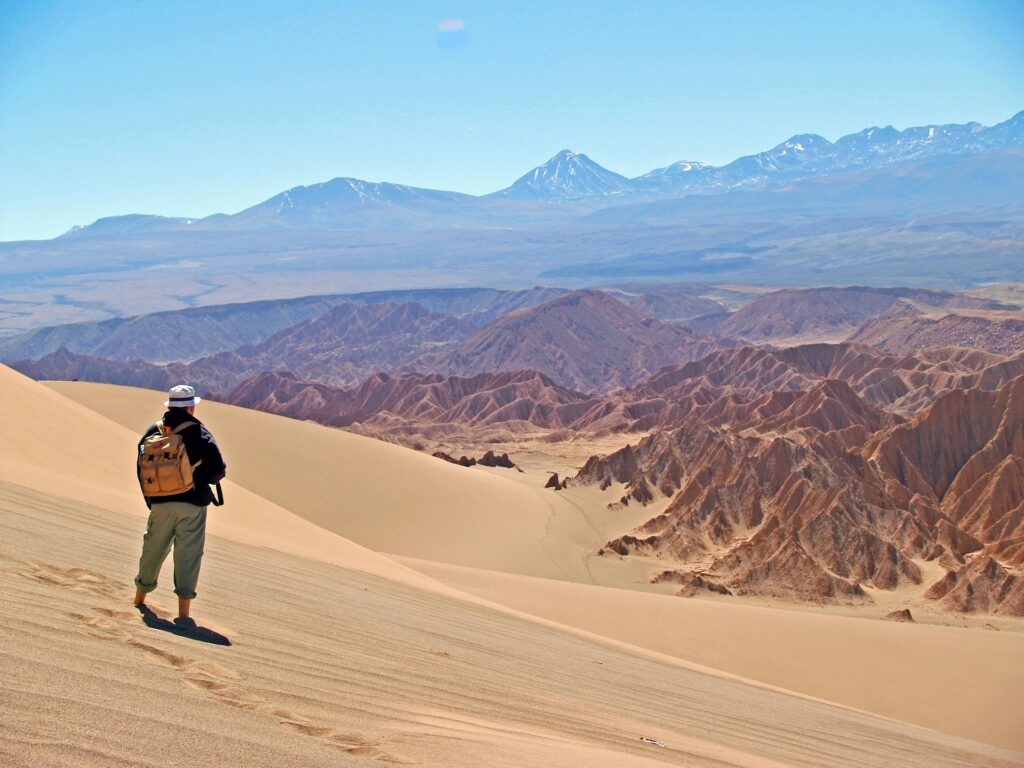
A little further on in the Cordillera, a total change of color. Red and white turn to grey and black as you approach the Valley of the Moon. No better name could be found for this immense, lifeless amphitheatre studded with strange, pointed rocks. The only thing missing is a slight lunar attraction!
This is where Stanley Kubrick shot certain scenes from «2001: A Space Odyssey». It's also where future space vehicles are sometimes tested before being sent to Mars. Opposite the yellow and red amphitheatre, an immense crescent-shaped dune of black sand. The highlight of the show is just around the corner, but to get there, you'll have to climb the ridge of the dune and settle in. Slowly, then, the sun makes the rocks of the Cordillera burst into red, before giving way to the stars. Curtain.
Salt
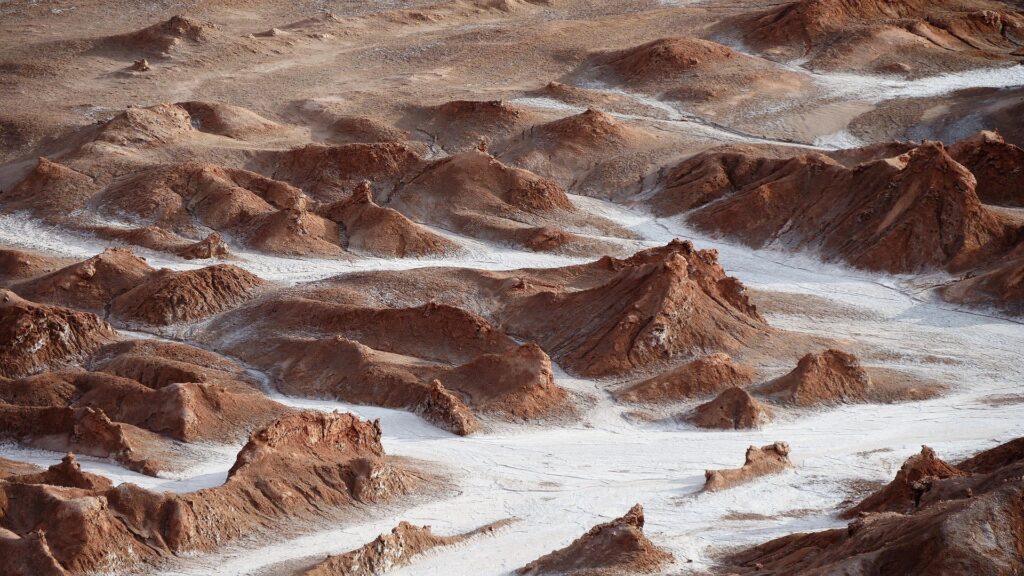
The Cordillera del Sal owes its name to the whitish deposits of sodium chloride that encrust it over large areas. At dusk, a strange phenomenon takes place in the heart of this mineral universe, in a part of the cordillera often ignored by visitors. It takes place in a canyon with luminous white walls. In reality, salt deposits left by a river that flowed here 25 million years ago. Just as the last ray of sunlight has disappeared, the walls suddenly start to crack from the sudden change in temperature, to the point where it feels as if the whole mountain is about to collapse... An eternal symphony offered by a truly incredible nature.
Indian legend has it that it's the tears of the Lascar volcano that occasionally moisten the canyons. A bachelor made inconsolable by the good fortune of his giant neighbor, Licancabur, to whom nature has attached a «wife», the Juriques volcano.
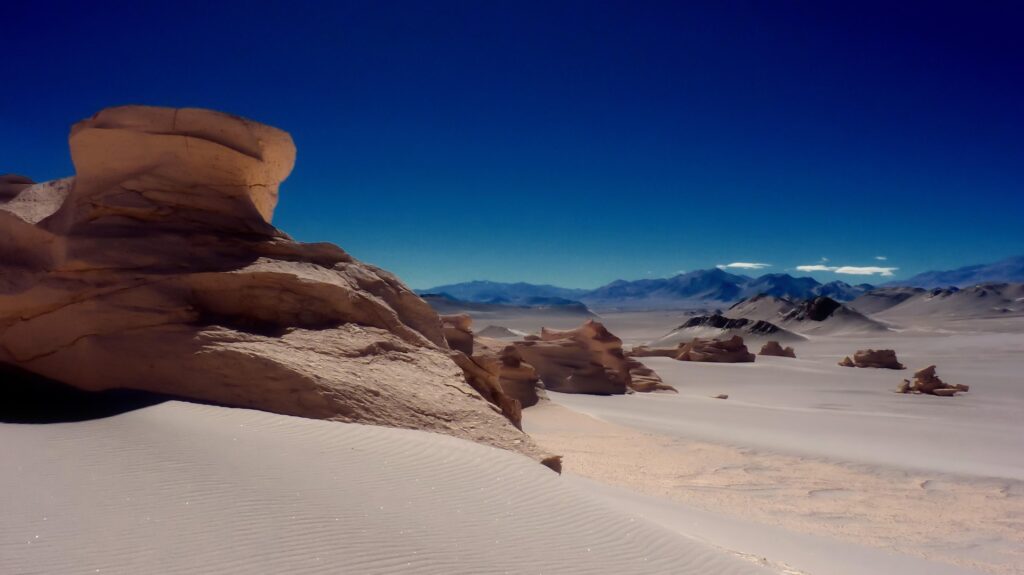
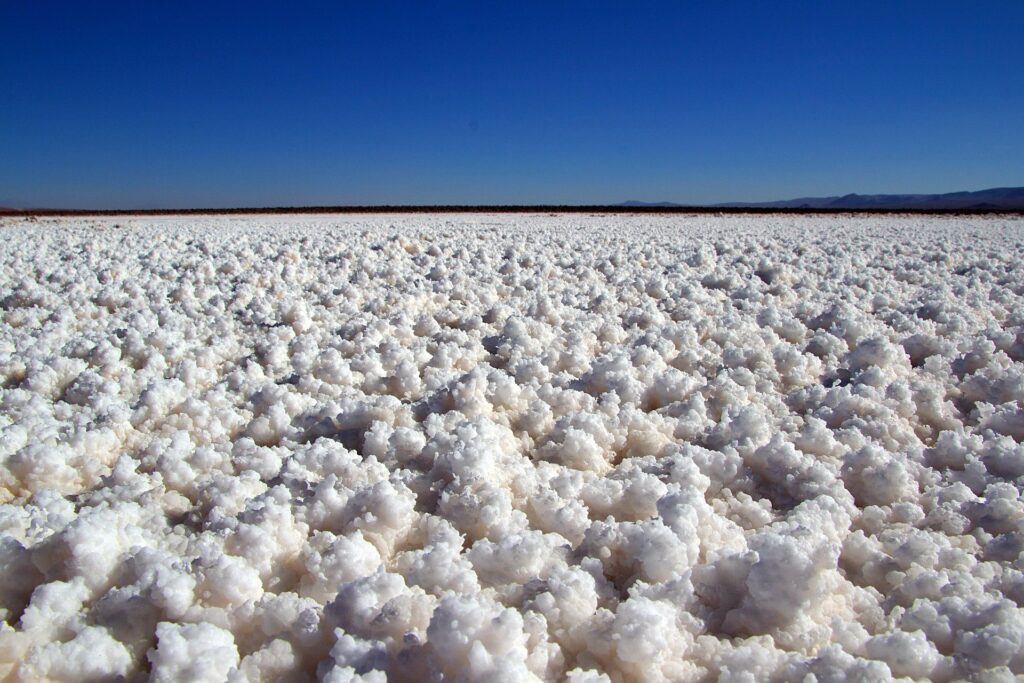
At the foot of these monsters, at an altitude of 2,300 metres, the Atacama Salar covers the plateau all the way to the horizon with a bristling crust of salt. Underfoot, they crunch like wafers. This is the third largest sea of dried salt on the planet. The days here are almost invariably torrid. And the intensity of the sun's rays is multiplied by the whiteness of the salt.
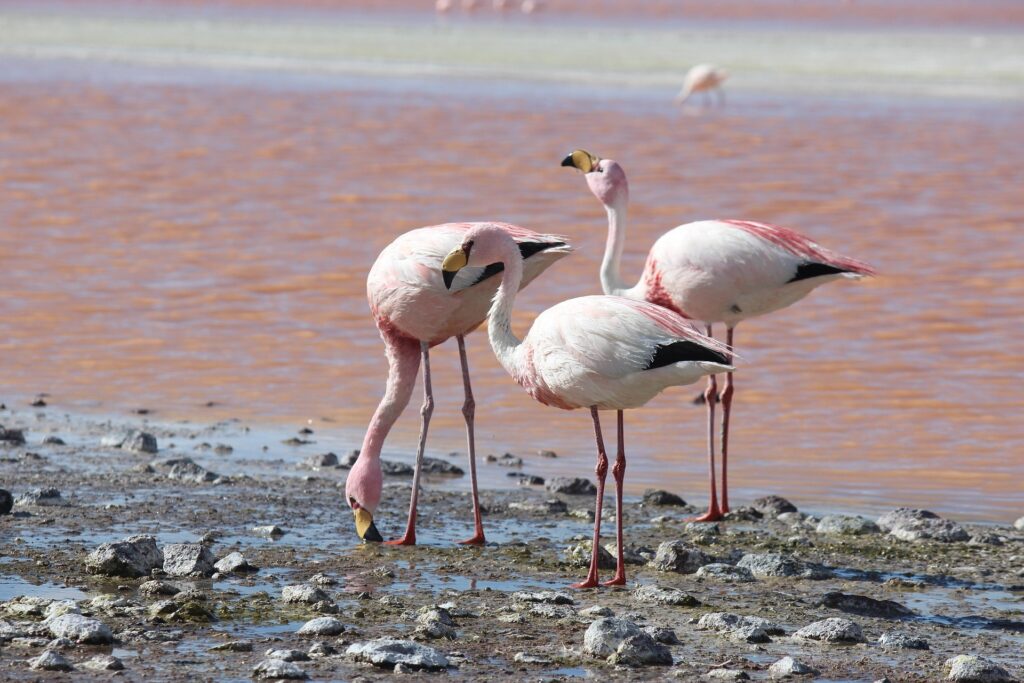
A large part of the salar has been declared a nature reserve. This means that you can only visit the Chaxa lagoon, which is home to a colony of pink flamingos. Flamingos have the peculiarity of dancing on their feet when looking for food.
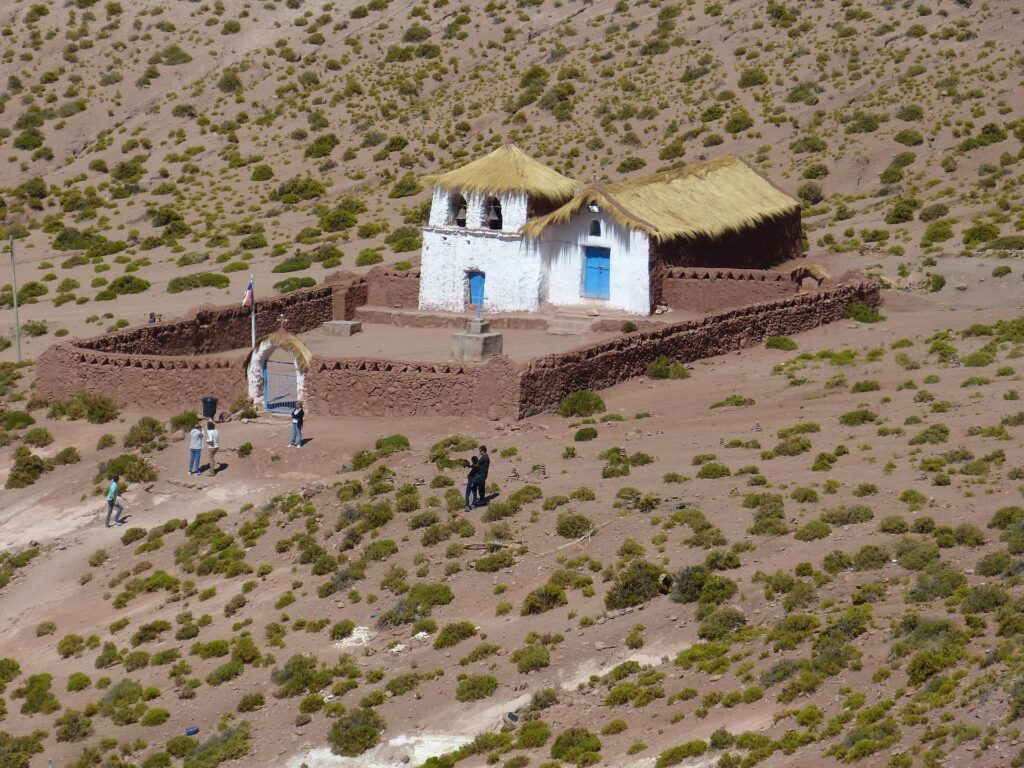
Despite its aridity, it's around the salar that the few villages are concentrated, usually grouped around an old white church. Here, the Atacameño Indians live in precarious conditions, cultivating a few square meters of corn and quinoa and raising llamas. Just as their ancestors did centuries ago.
Light
Further north, on the Bolivian border, it takes some courage to reach the El Tatio site. First you have to get up in the wee hours (3:30 a.m.), then take a three-hour bumpy drive in a 4 x 4.
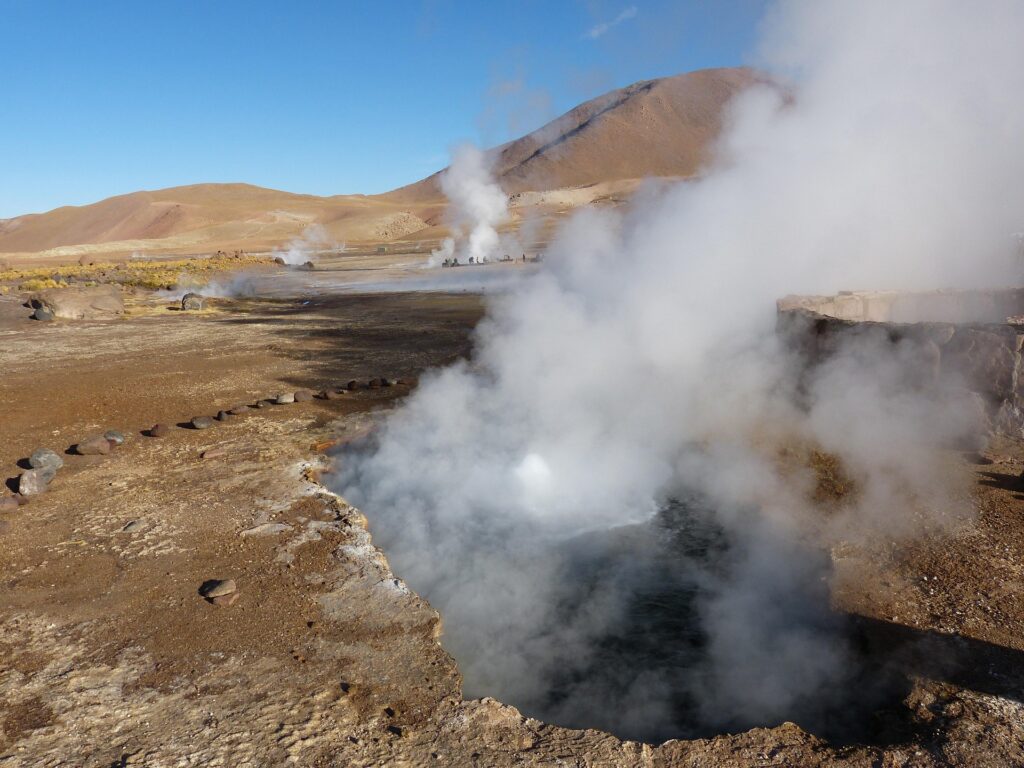
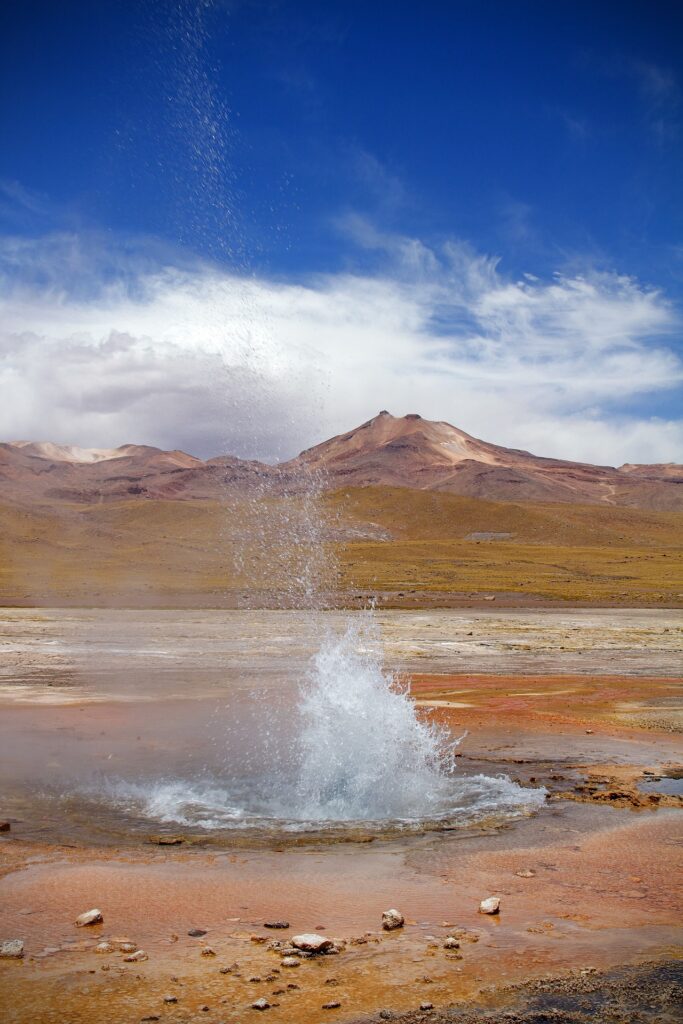
Here, in the foothills of the Andes, geysers, mud pots, fumaroles and colorful streams bear witness to the surrounding volcanism. Winter gear is a must, because even in the height of summer, it's freezing every day at sunrise! This is the time of day when contact between hot water and icy air produces the most condensation.
It's a dangerous place, and getting too close to a geyser or mud pot can end in an accident. Every year, several visitors are seriously burned or even killed. So be careful. Some visitors round off their visit with a soak in one of the hot springs on the edge of the plain. And then, for breakfast, they enjoy geyser-fired eggs!
On the way back, stop off at the picturesque village of Chiu Chiu. Its church, with its adobe walls, thatched roof, cactus wood doors and ceiling, is one of the oldest in Chile. 300 Indians live here, raising llamas and cultivating a few plots of peas and cereals.
Water
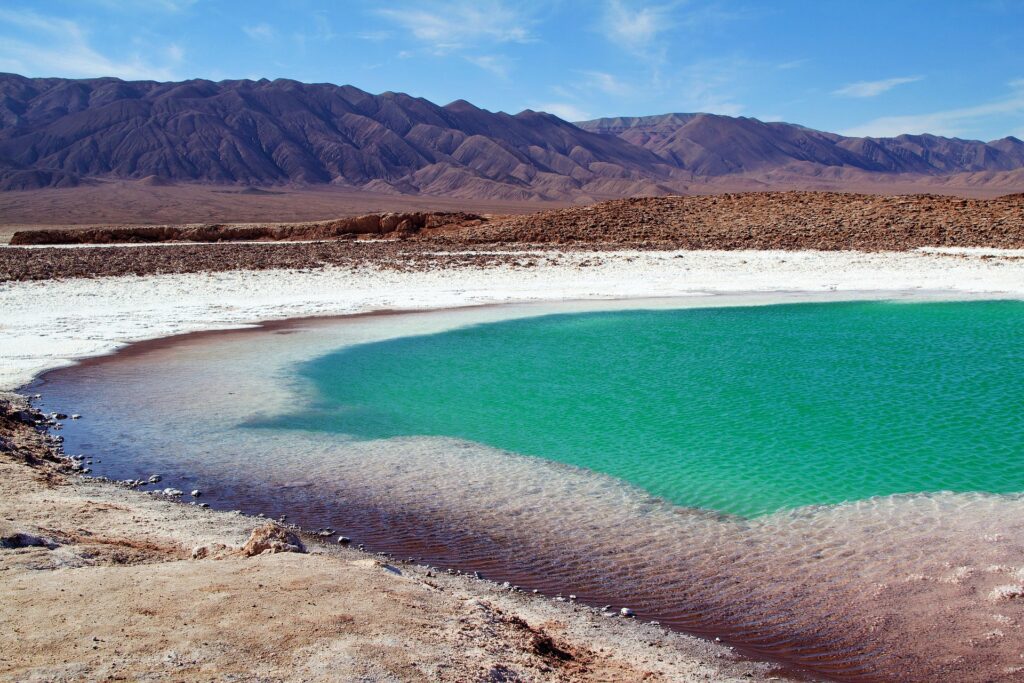
The aridity of the Atacama is largely due to the countless reliefs, often volcanoes, that encircle the region, themselves interspersed with high plateaus. These ecosystems are also home to many wonders. Like the twin lagoons of Miscanti and Miñiques, 120 kilometers south of San Pedro.
As the road climbs, we come across more and more llamas and vicuñas grazing on the few rough blond grasses that dot the puña. The air is getting thin, and with the slightest effort, our lungs are getting out of breath. As we pass the 4,000 mark, the sky takes on increasingly intense azure hues, unknown to us. We finally reach the Reserva Nacional Los Flamencos.
Below extinct volcanoes, the two sun-drenched lagoons form a kaleidoscope of vivid colors. The Atacama is proof that even under the harshest conditions, nature continues to amaze.
Air
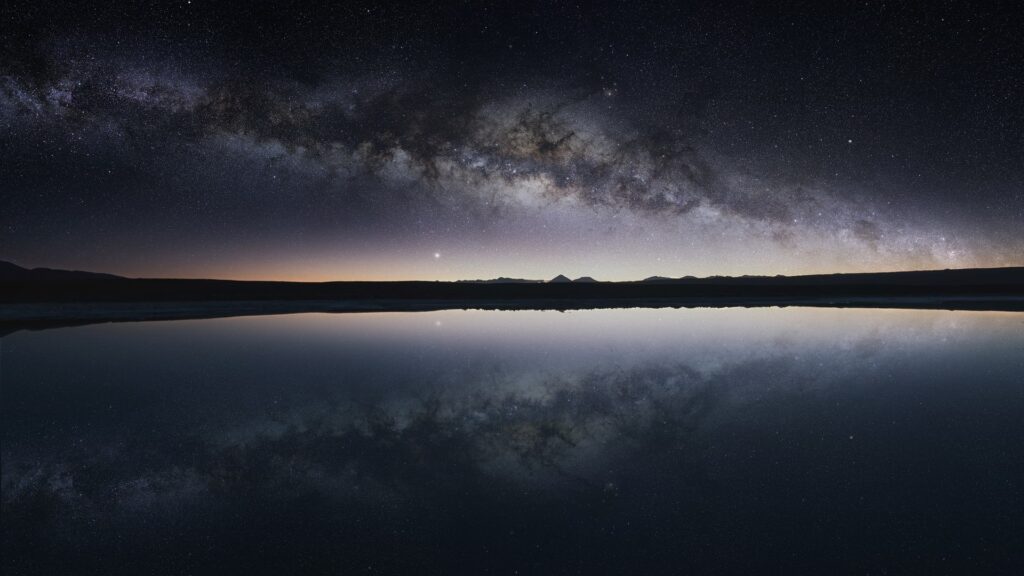
The Atacama is also a paradise for stargazers. For here, almost every night is illuminated by the Milky Way. The extreme dryness and absence of light pollution open up the sky like a book to the planet's most powerful telescopes. Including those of the famous and ambitious international «Alma» project. Installed at an altitude of over 5,000 metres, this giant radio telescope with dozens of antennae is designed to help us understand star formation, discover new exo-planets and perhaps even extra-terrestrial life. For many Atacameños, proof is no longer needed, since most of them claim to have already seen... UFOs over the desert. And often on several occasions!
On the other hand, to learn how to read the celestial vault and to observe the stars more closely, nothing beats an observation session such as those organized by astronomers in the middle of the desert. With less expensive and less bulky equipment, but with just as much passion as Alma's scientists. Like Jorge, a true Atacameño astronomer, who has set up his small observatory near San Pedro, in the middle of the desert.
Comfortably seated with his head towards the celestial vault, we first listen to him go over a few rudiments of astronomy. He proudly explains that the brightest stars are visible in the southern hemisphere, starting with Sirius. Our famous North Star is not even among the 20 brightest! Jorge then invites his «students» to observe some of the 88 constellations, the Milky Way, nebulae and stars with the naked eye. Then it's time to get hands-on. The telescopes are then pointed at specific points in the sky, including red Mars. Jorge also has tripods at his disposal, and is happy to help photo enthusiasts immortalize the starry nights of the Atacama.
Carnet de voyage :
- When to go: the Atacama is pleasant all year round, even between January and March, during the «Bolivian winter» which sometimes drenches the desert a little. It's a great opportunity to see the desert in full bloom!
- Health: no vaccinations are required. The biggest threat to travelers is «soroche», altitude sickness, which can lead to fatigue and nausea. To avoid it, drink plenty (but a minimum of alcohol), eat lightly and avoid over-exertion.
Infos : http://chile.travel/fr.