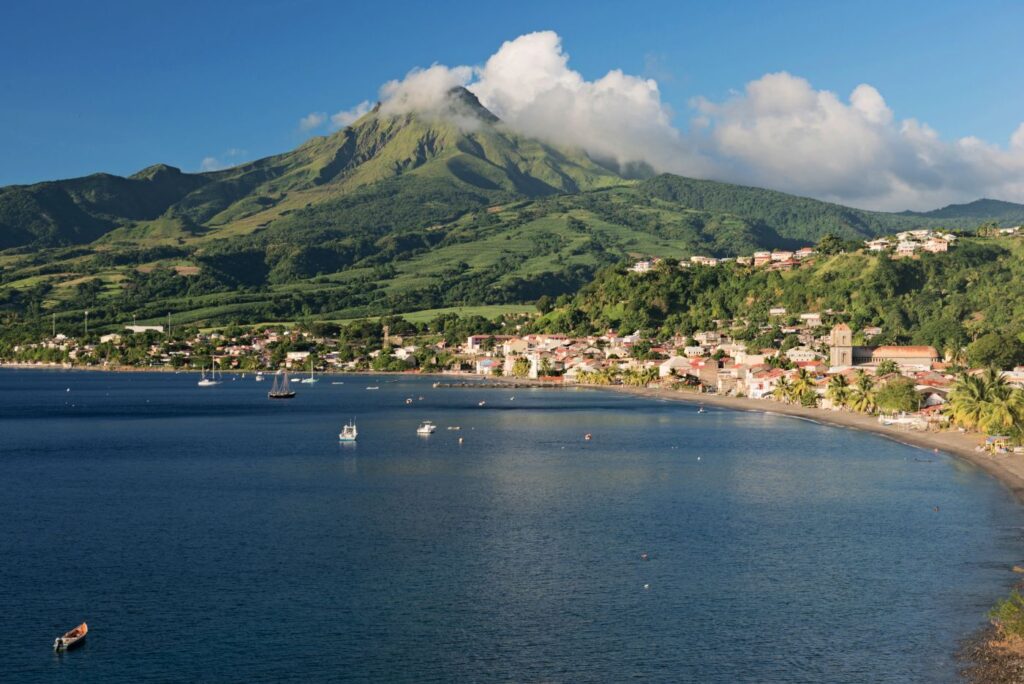
We go there for its white and sometimes black sand beaches, for its sunshine and tropical climate, for its nonchalant atmosphere and its delicious Creole language. But thanks to its extraordinary location between mountains, tropical forests and ocean, Martinique is also a fantastic nature destination. Here's the proof in 10 steps.
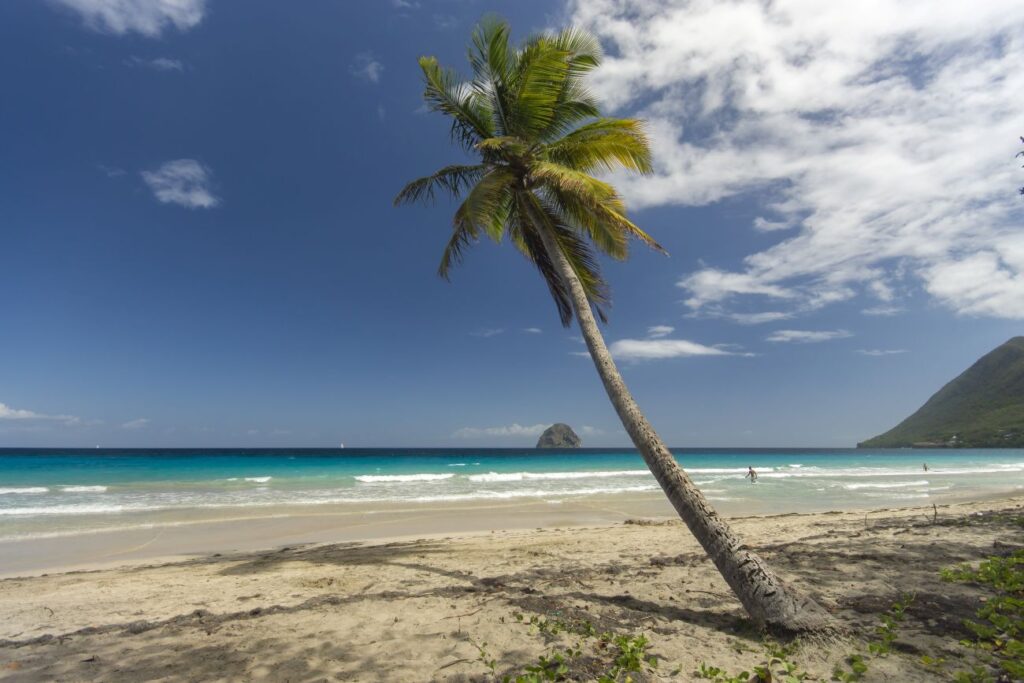
In Martinique, the warm air is always tempered by the trade winds that caress the treetops. A paradise-like atmosphere that becomes even more pronounced when you discover the lush vegetation. Anthuriums, hibiscus, heliconias, birds of paradise, flamboyants, alpinias, balisiers... Martinique is also the island of flowers. Everywhere, colorful gardens, vegetable gardens and dense forests. This exuberance is reflected in the island's topography, which is just as full of flowers, with enchanting, colourful names such as Ajoupa Bouillon, Morne d'Orange and Brin d'Amour. So many invitations to explore its paths and experience the beauty of the West Indies to the rhythm of its natural wonders.
1. Climbing Mount Pelée
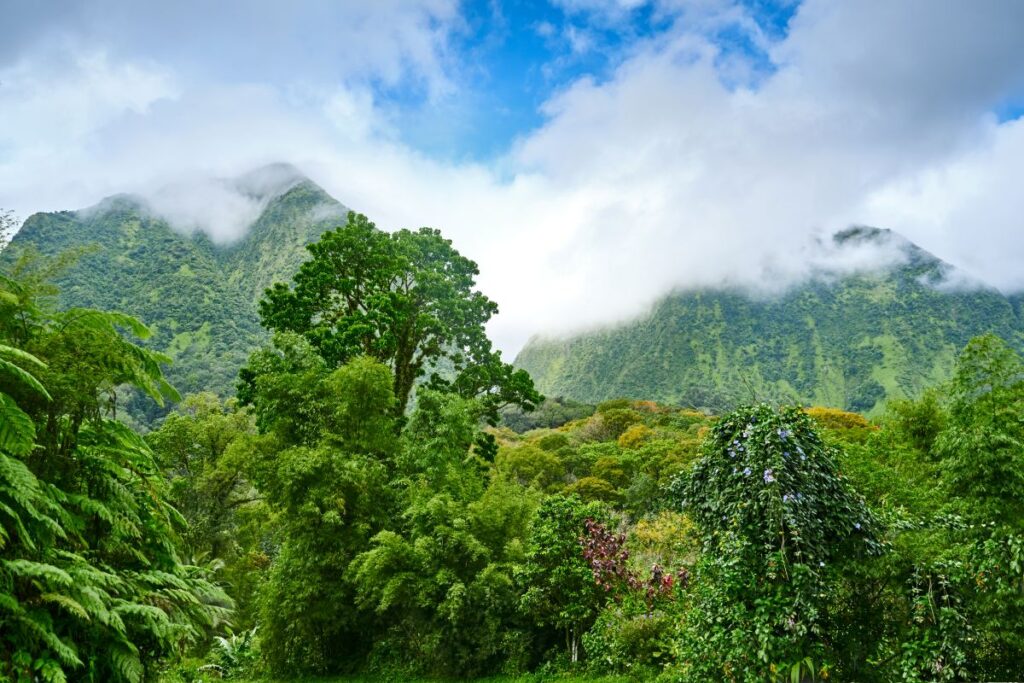
On paper, the island isn't very big - just 34 km by 60 km - but its rugged terrain adds an extra dimension. Martinique is said to be mornée. Mornes can be found everywhere, and the term designates a hill, a large rock or a mountain - in short, anything with relief. These variations in altitude give rise to a host of microclimates and four types of highly biodiverse forest. Since 2019, the forests surrounding Montagne Pelée have even been listed as one of France's 15 exceptional forests. They can be discovered as you climb to the island's summit, at 1397 m. And at the end of 2021, the entire island was classified as a World Biosphere Reserve.
2. Surveying the Pompeii of the West Indies
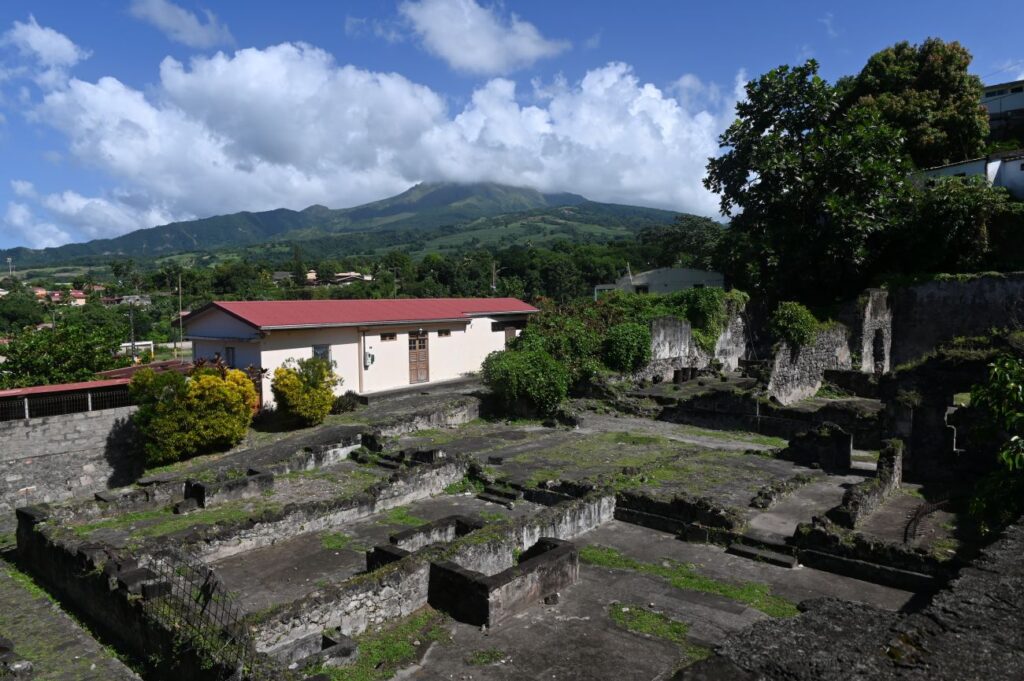
In Martinique, the mountains bring the best but also the worst. At the beginning of the 20e In the 19th century, the city of Saint-Pierre was the queen of the Antilles, so prosperous and vibrant that it was called the Paris of the tropics. Until May 8, 1902, when the Montagne Pelée volcano sealed its fate and that of its 26,000 inhabitants in incandescent ash. The Saint-Pierre of today is but a shadow of the bustling city of 120 years ago, yet it retains a charm all its own, dominated by its eternal, bulky volcanic neighbor. As you wander through the streets, you'll still come across the ruins of a theater, a church or the old prison. At the brand-new Frank A. Perret Museum, you can step back in time to the catastrophe: almost half of the objects recovered are on display. It's fascinating to discover these partly melted utensils, as well as foodstuffs (cheese, beans, coffee, etc.) spared from thermal shock.
3. Reach the village at the far end
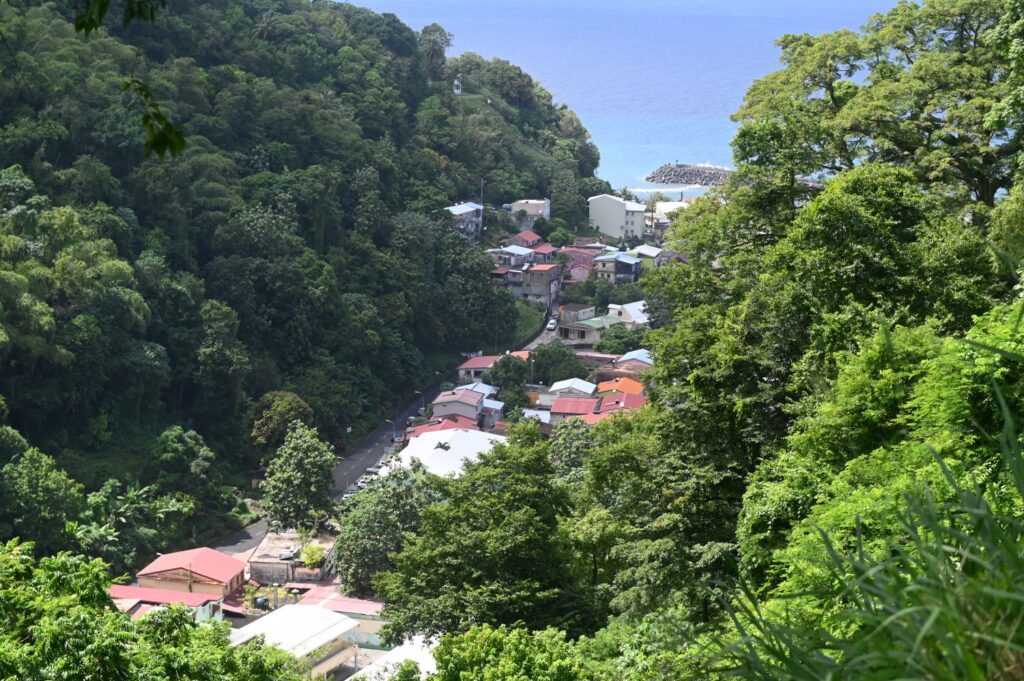
Heading north, the forest becomes even denser. This profusion of vegetation has a secret: here, on the slopes of Montagne Pelée, it can rain ten or fifteen times during the day, but for no more than five minutes each time, and then the sun returns. The road winds up and down the hillside in hairpin bends, over ancient metal bridges in the middle of lush jungle, ending at Grand’ Rivière, the northernmost village, wedged between sea and mountain. And crossed by Martinique's biggest river. There are barely 700 inhabitants in this community at the end of the world. Here, everyone knows each other, is cordial and says hello. It's a village of kindness. It's an old-fashioned way of life that even other Martiniquais like to return to for a day out.
4. Escape between land and sea
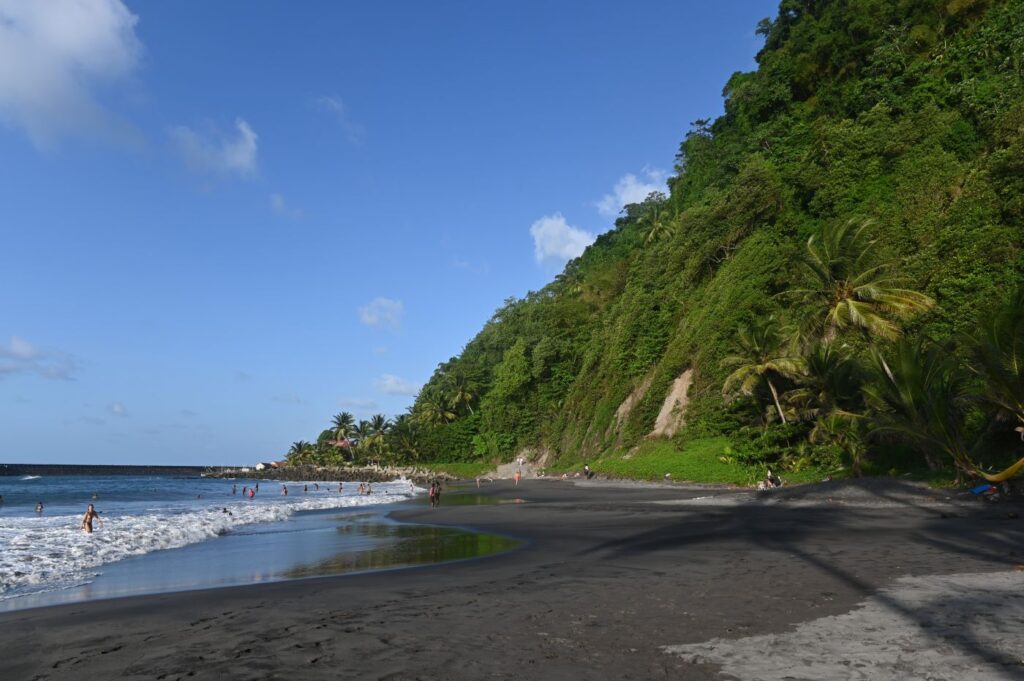
Just beyond the little port of Grand'Rivière stretches a large black sand beach fringed by mountains and forest. From here, a renowned 17 km hiking trail winds its way from wild cove to wild cove to the village of Le Prêcheur. If you book in advance with the local tourist office, you can even organize a return trip by yole, the traditional large-sailed boat recognized as a UNESCO World Heritage Site.
5. Taking on a giant
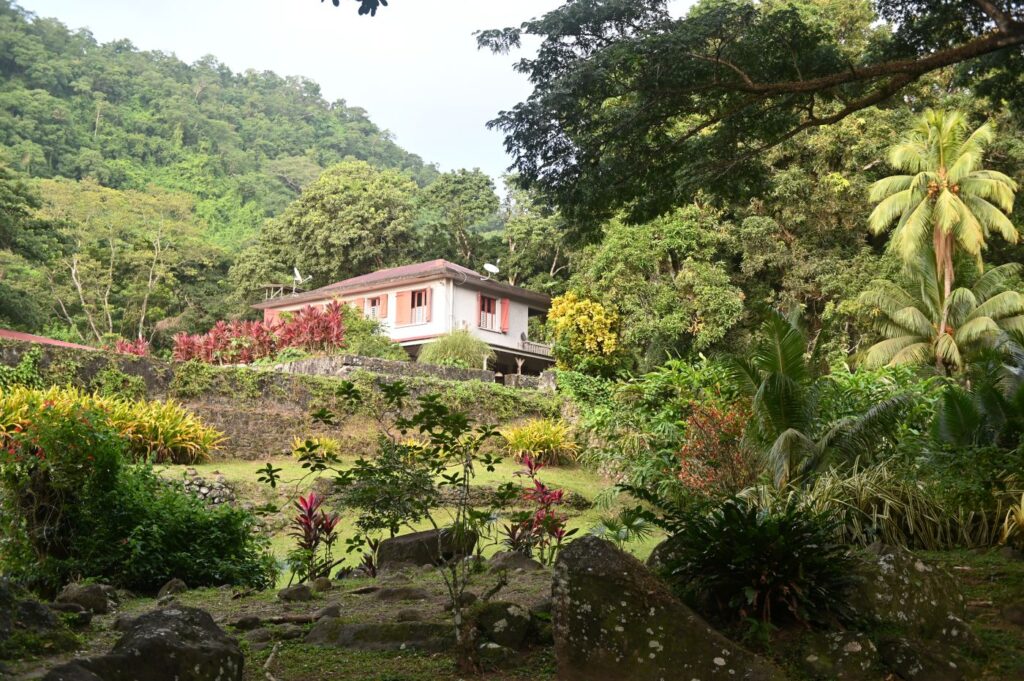
In Prêcheur, on another slope of Montagne Pelée, Habitation Céron is one of the island's oldest plantations. Here, everything is gigantic and disproportionate, the trees reach for the sky, and yet the setting is one of calm and serenity. In the middle of the estate thrives the largest tree in the West Indies, ranked France's most beautiful tree in 2016: a remarkable zamana tree at least three centuries old. A species native to Mexico, its foliage opens when it rains. Perfect for growing cocoa. The old cocoa plantation was restored in 2015 and a further 10 hectares planted. The chocolate produced on the estate was recently ranked among the 20 best in the world.
6. Slide into the canopy
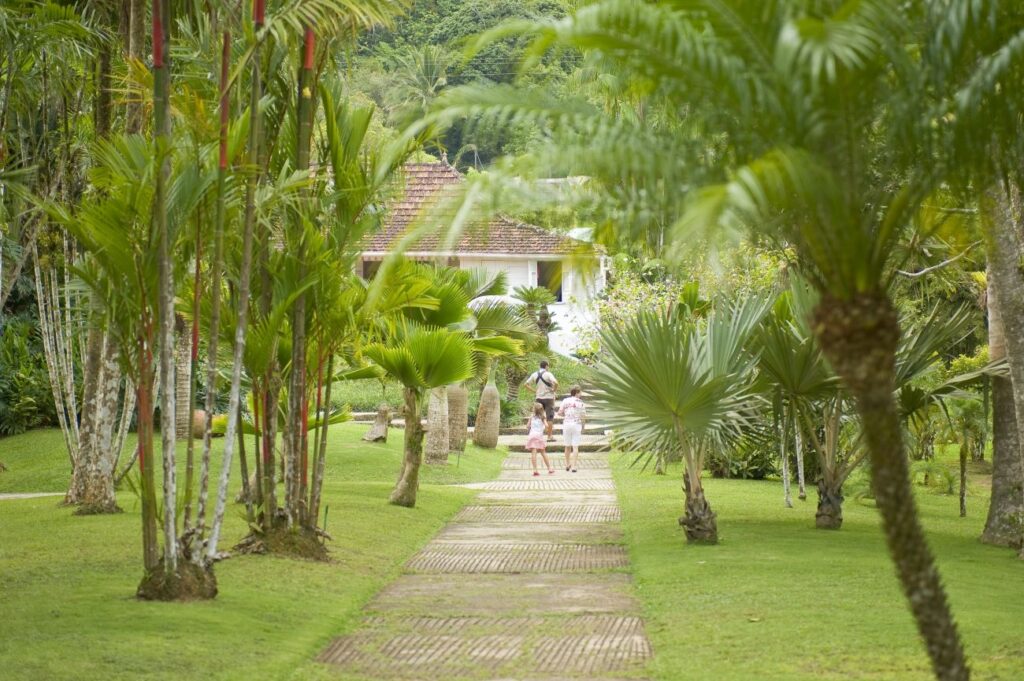
Martinique has an abundance of gardens. Among the most remarkable are the Domaine d'Emeraude garden, with its 4 km of forest paths, and the Balata garden, of unequalled richness and beauty. For a thrill, you can venture into the canopy on suspension bridges 15 m above the ground, clinging to giant mahoganies. The Bonneville garden, entirely designed and laid out by two flower lovers along a stream, has a flower-collecting atmosphere. Chocolate-colored heliconias, porcelain roses and monumental trees stand side by side.
7. Hiking and swimming in the forest
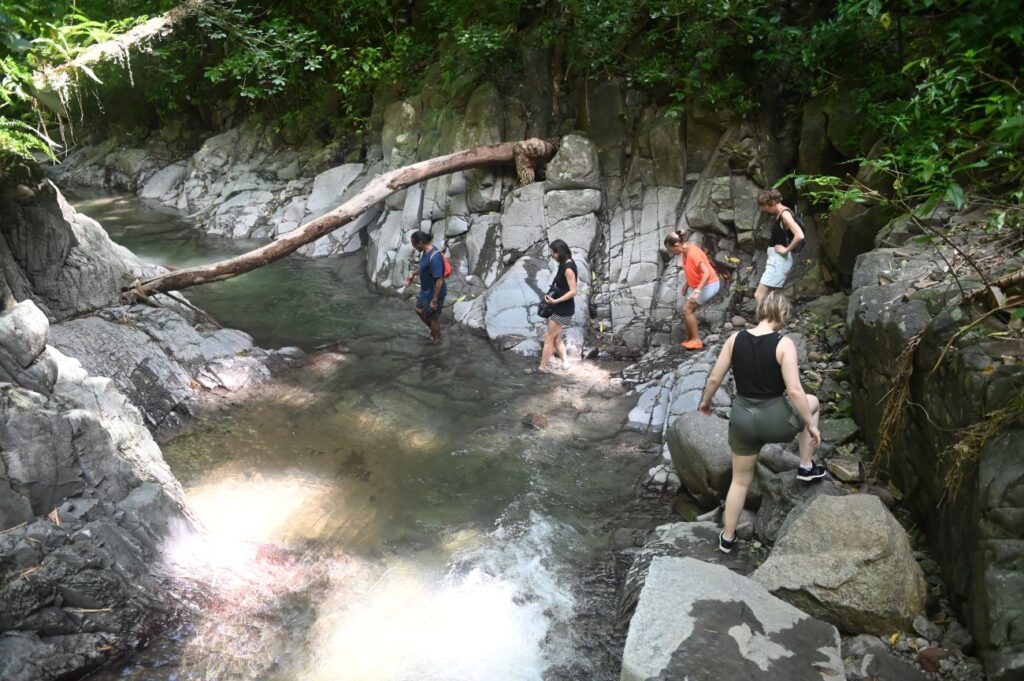
Another unforgettable itinerary starts from Montagne Pelée: the Route de la Trace, as it's called, a veritable botanical trail where, on either side, the forest forms a green wall. The region is a breeding ground for hikes. The Bouliki trail through Martinique's largest forest takes you up the Rivière Blanche. As a reward, you can take a dip under a waterfall or in one of the natural pools created by the white water. Another must: the Trace des Jésuites, an ancient path used by monks in the 17th century.e century. Best done in the dry season to avoid wading in the mud.
8. Strolling between two waters
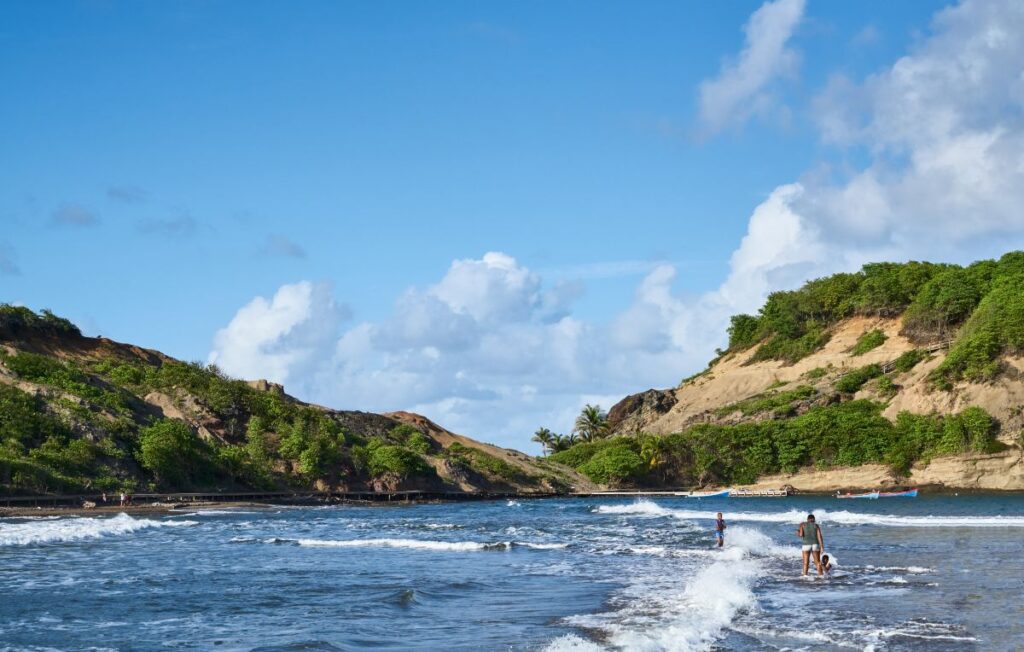
A stroll between two waters: for almost 200 m, your feet are licked by the waves to the left and to the right. Created by a combination of sea currents and tides, the tombolo at îlet Sainte-Marie is a spectacular phenomenon. This tongue of sand appears from January to May, providing a link between Petite-Anse, the beach at Sainte-Marie, and îlet Sainte-Marie, which is ideal for walks and picnics, on foot, on horseback or by bike. Before disappearing again at the end of the season.
9. Kayaking over the sea baths
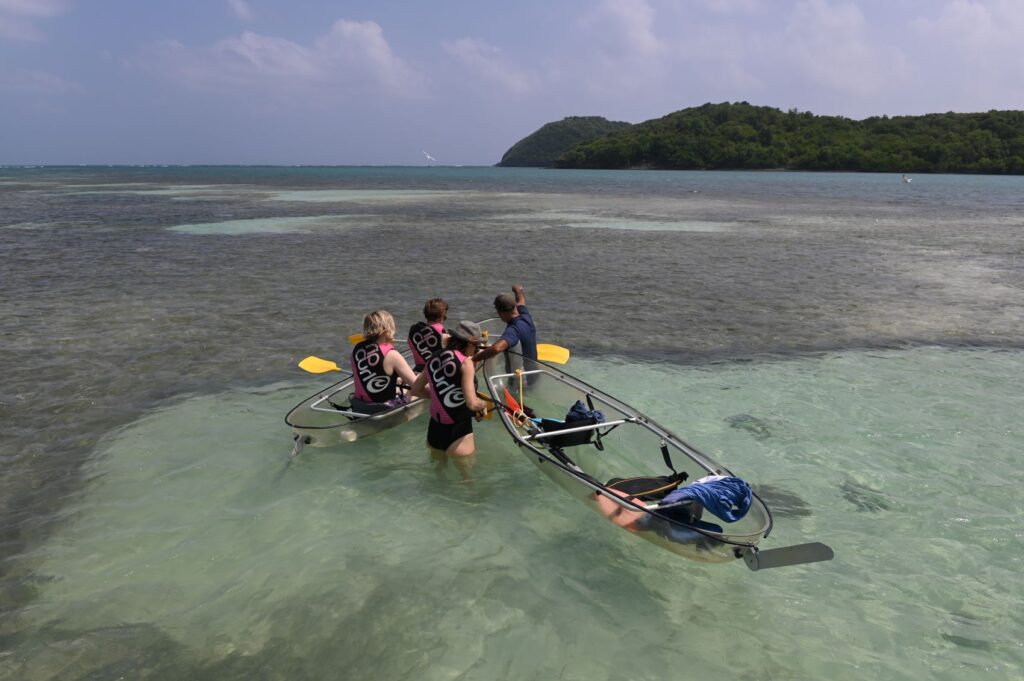
Even the sea takes on green hues in Martinique. On the calmer Caribbean side, the sea is transformed into turquoise lagoons and vast mangrove swamps. The Atlantic coast is protected by a coral reef. This can be explored by transparent-bottomed sea kayak, particularly around Le Vauclin. A more challenging excursion, but with an unforgettable reward: the natural baths and vegetation-covered sandbanks of Trou Cochon.
https://kayakevasionmartinique.com.
10. Robinsonnade on the islets
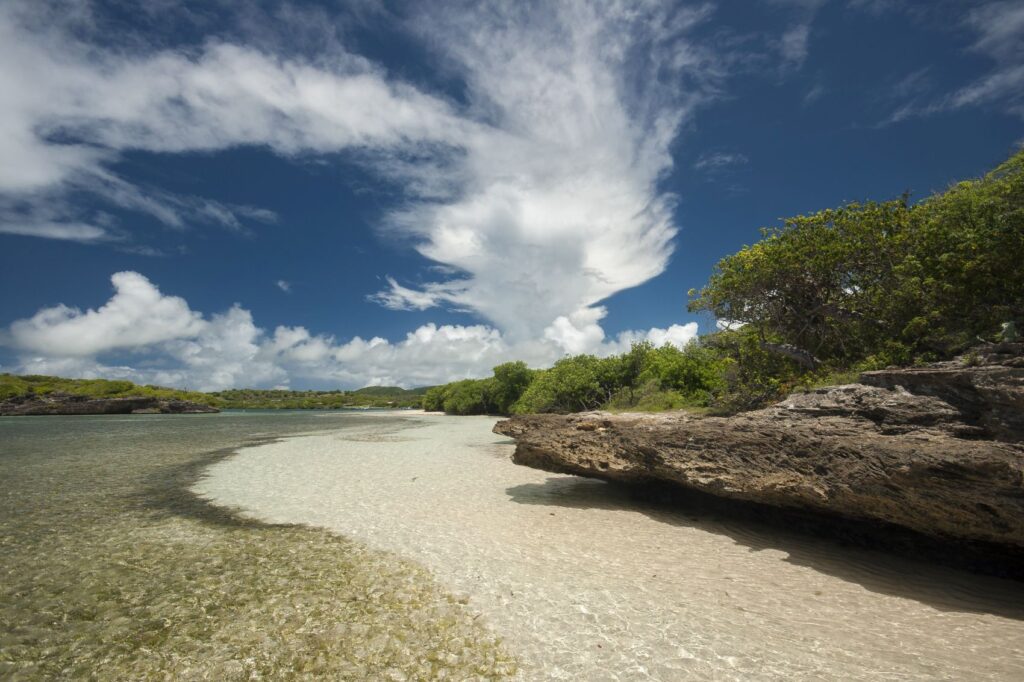
Scattered like a string of pearls around Martinique, nearly fifty islets are part of a nature protection program. Some are reserved for birds, others for iguanas, but a handful can still be visited. Islet Oscar, opposite Le François, is even home to a listed residence with a rather unusual history: built on a neighboring islet, it was lost in a game of chance by its owner, then dismantled and thrown overboard to drift towards the banks of Islet Oscar, where it was rebuilt in 1935. Today, it is a tropical guest house with 4 charming rooms.
Carnet de voyage :
Formalities With a European identity card and euros, you can enter and pay in Martinique just like at home.
Accommodation/restaurants :
Villa Saint Pierre. A family address in the heart of Saint-Pierre, facing the sea. Just a few rooms and unforgettable Martinique-style breakfasts on the rooftop. www.hotelvillasaintpierre.fr.
Aunt Arlette. For over 70 years, locals have gathered here to feast on traditional dishes, especially fish, seafood and crayfish from the river. www.tantearlette.com.
Habitation Céron. In addition to the magnificent estate, its forest-side restaurant offers breathtaking blind tastings using only products from the estate. https://habitationceron.fr.
Places to visit :
Distillerie JM. Learn all about the island's flagship beverage via an interactive exhibition. One of the best agricultural rums in the West Indies is produced here. www.rhum-jm-la-distillerie.com.
Find out more : www.martinique.org.