With its harmonious, balanced landscapes straight out of a Renaissance painting, the province of Siena is one of the most scenic in Tuscany.
Siena, the ochre city
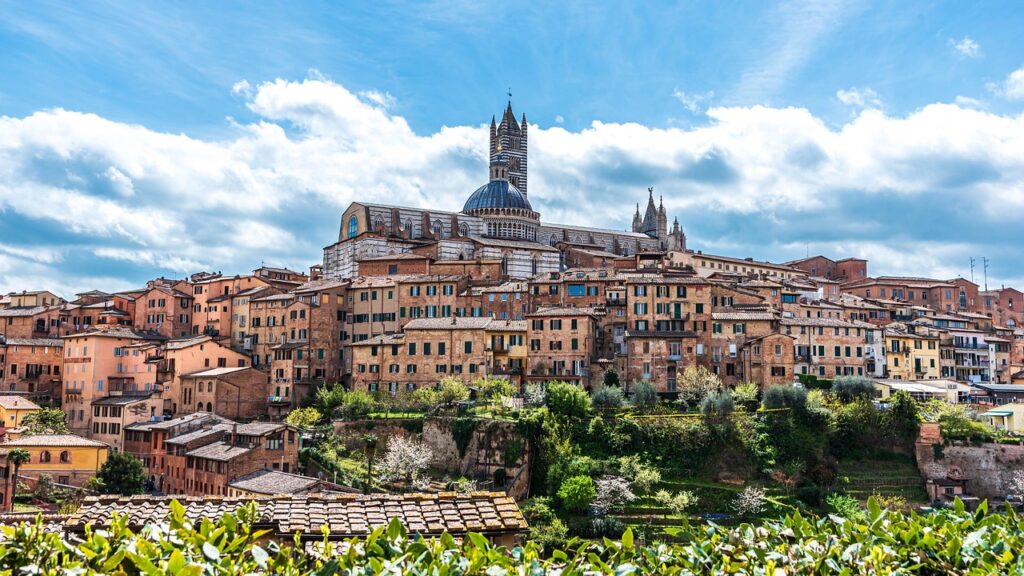
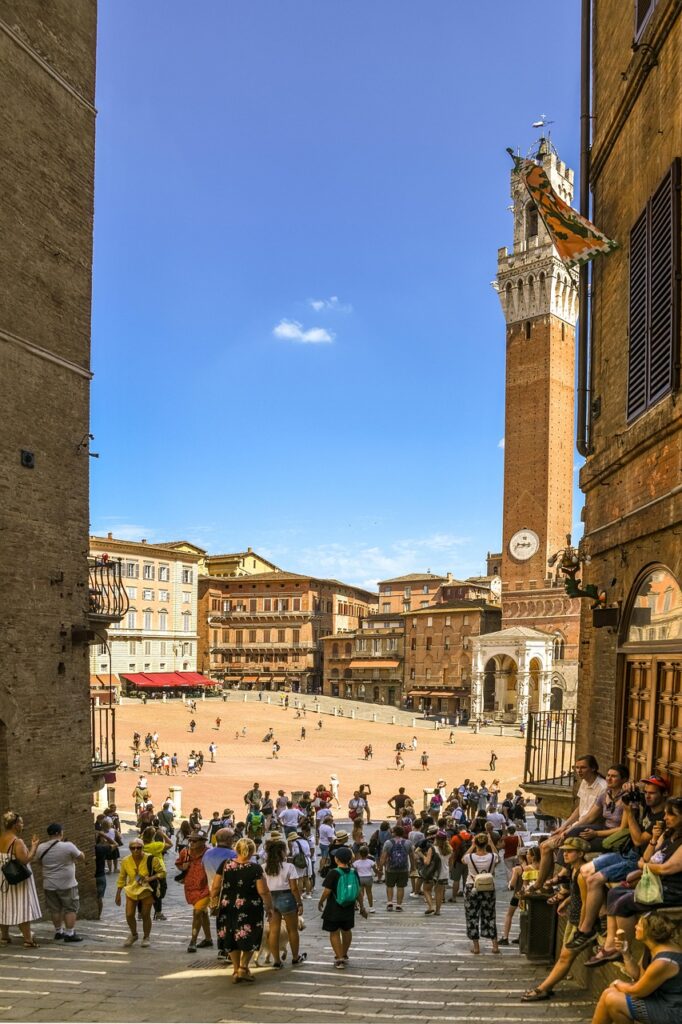
At the end of the Middle Ages, Siena was one of the most populous cities in Europe! Everything here still breathes the spirit of those prosperous times, when merchants and bankers made Siena famous and prosperous. Rather like Bruges, which retained its original appearance despite its sudden decline, the beautiful Tuscan town remains eternally encased in its earth-toned stone... of Siena. Like all Tuscan cities, Siena is best explored on foot, with your nose in the air, through its winding, sometimes steep streets. At one point or another, you inevitably come to the Piazza del Campo, originally sloped to collect the all-too-frequent rainwater and supply the city, which has no watercourses. Cathedral, baptistery, museums, churches, palaces, the oldest hospital in the world... the city of Siena alone justifies a short stay or citytrip.
Wild race
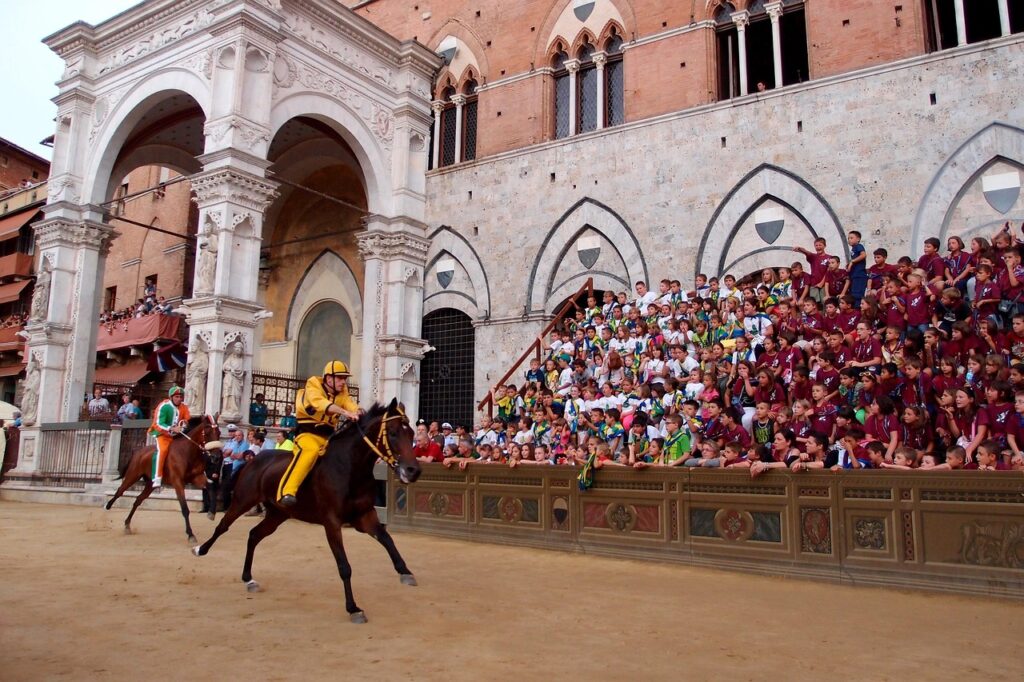
In Siena, the Palio is a horse race, but above all it's a sweet madness, undoubtedly the most eagerly awaited moment of the year for the Sienese. Before the event, the contrade (city districts) parade in colorful, richly embroidered medieval costumes. Each rider represents the colors of a contrada. To avoid any cheating, they all come from Lazio or Sardinia. Of the city's 17 contrade, only 10 are selected at random to take part in the race. Horses are ridden bareback. The only equipment allowed is a riding crop. However, all blows are permitted, including tipping over an opponent. The horse that first completes the three laps of the square wins the Palio, regardless of whether or not it is still carrying its rider... Although the race lasts only three minutes on average, it is no less violent, and horses and even riders can be killed in the process.
Desolate lands
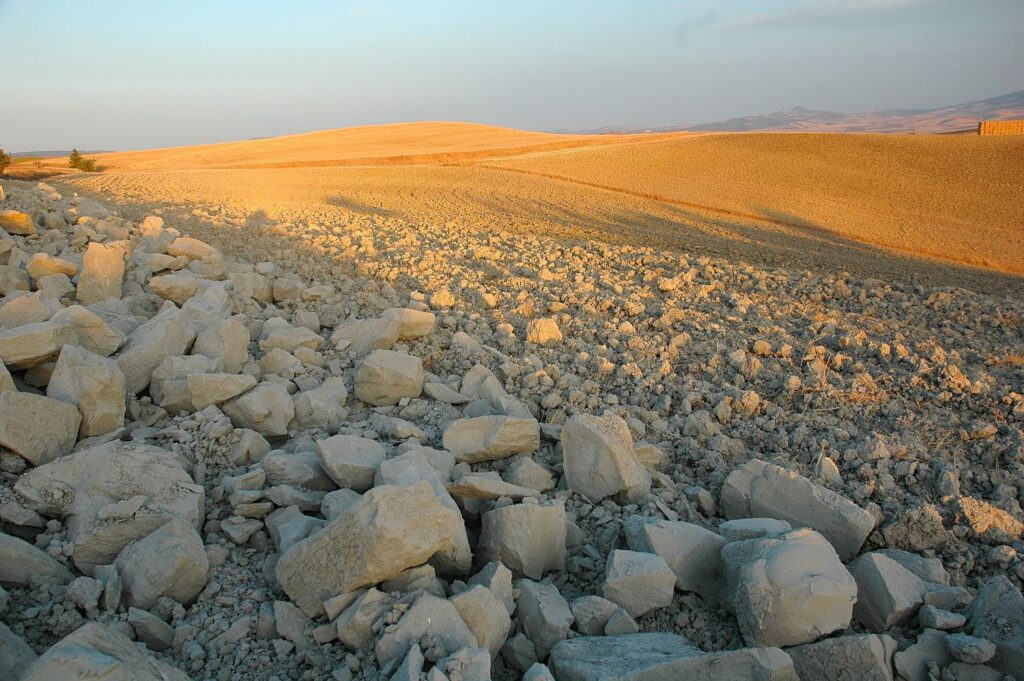
To the south-east of Siena lies the rugged terroir of the «Crete Senesi», These often barren hills are covered with endless fields of cereals, and as soon as the harvest begins in July, they turn into fields of heavy, stone-hard clods of white clay. It's a harsh, desolate land, sometimes even lunar, which means that the view from the top of the ridges is often 360°. The climate is just as extreme and versatile.
Pienza, the ideal mini-town
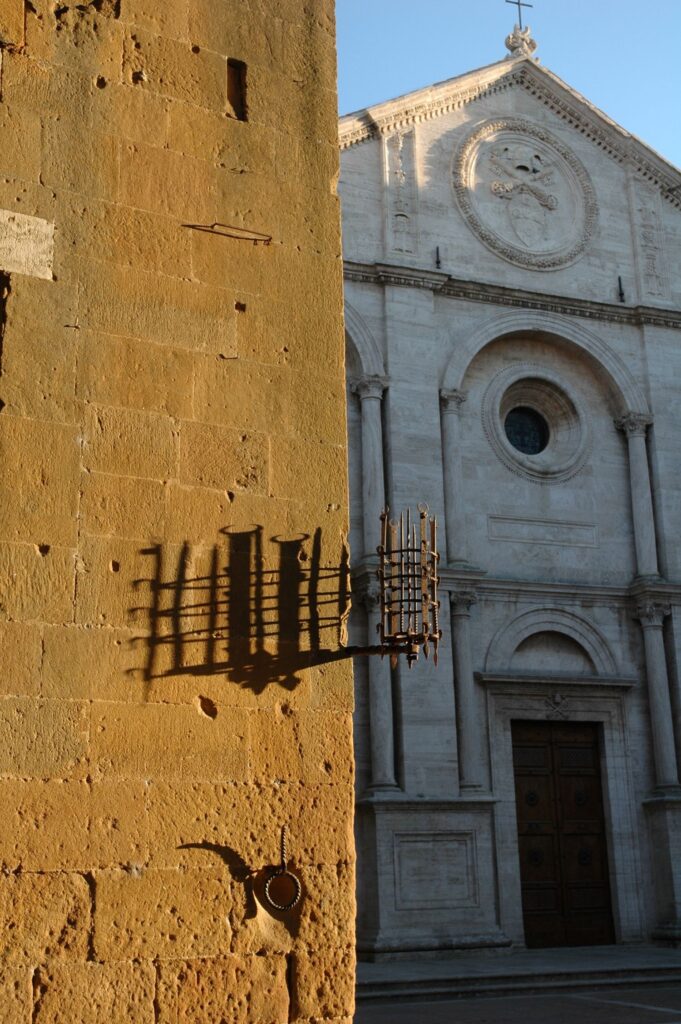
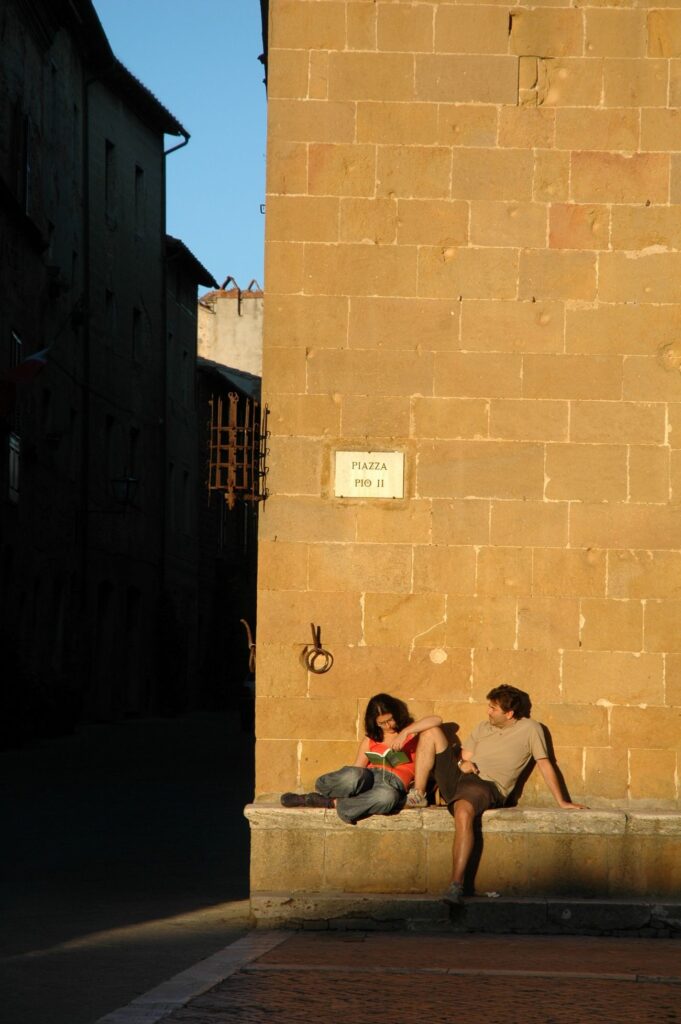
Continuing southwards, we reach the Orcia valley and Pienza, a delightful little town full of atmosphere. Built to satisfy the pride of a native Renaissance pope, its palaces were meant to rival those of other Tuscan cities. But nothing was done, and Pienza has retained its big-village appearance, as if it had been dropped by mistake in the middle of the fields, with a single long palace-lined street bisected by a medieval piazza. At sunset, you can take a stroll on the ramparts, from where you can see the entire Val d'Orcia. Many scenes from «The English Patient» and «The Gladiator» were filmed in and around Pienza.
Val d'Orcia
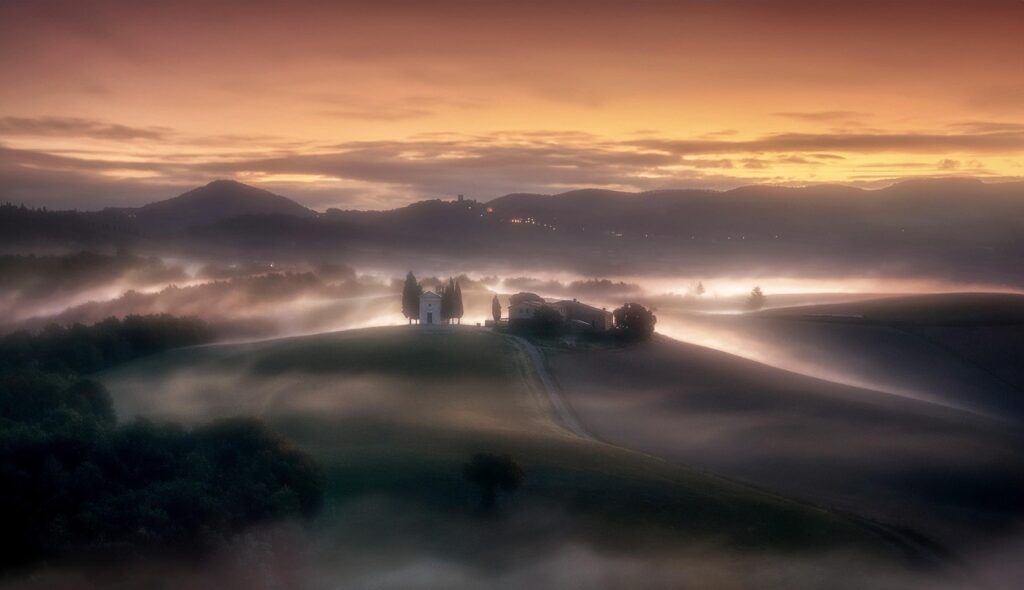
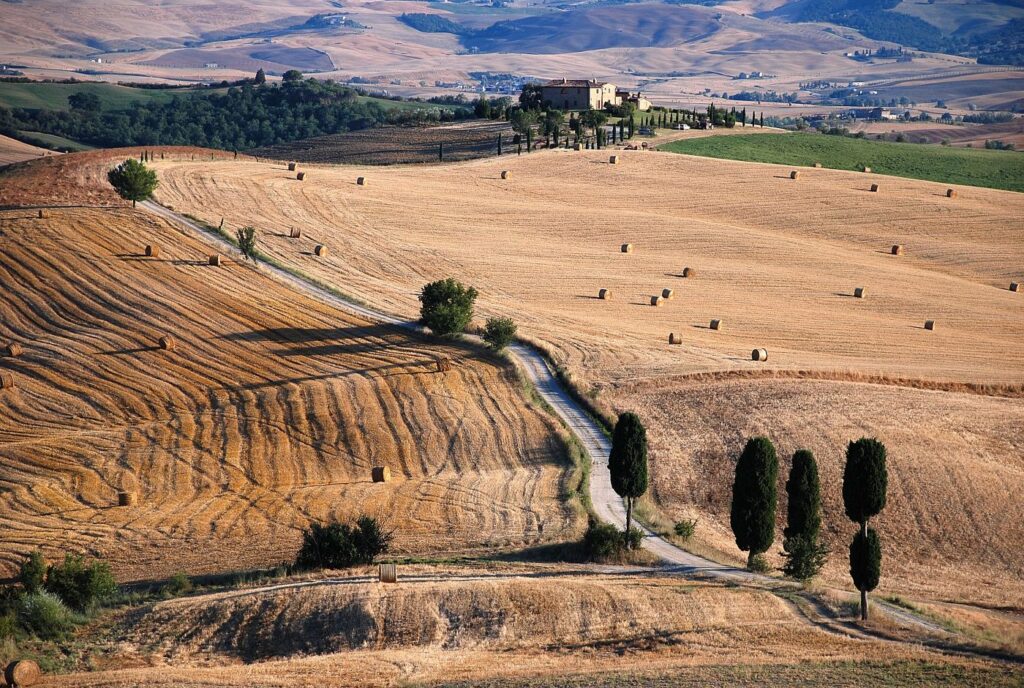
At the foot of this golden city, the Val d'Orcia unfurls its marvels: fields of wheat climb the hills, punctuated here and there by cypress trees with astonishing flame shapes, in groves, rows or sometimes solitary, and, on the horizon, a few perched villages. In the Val d'Orcia, you often get the impression that man and nature have combined their decorative talents to create perfectly balanced, almost biblical landscapes.
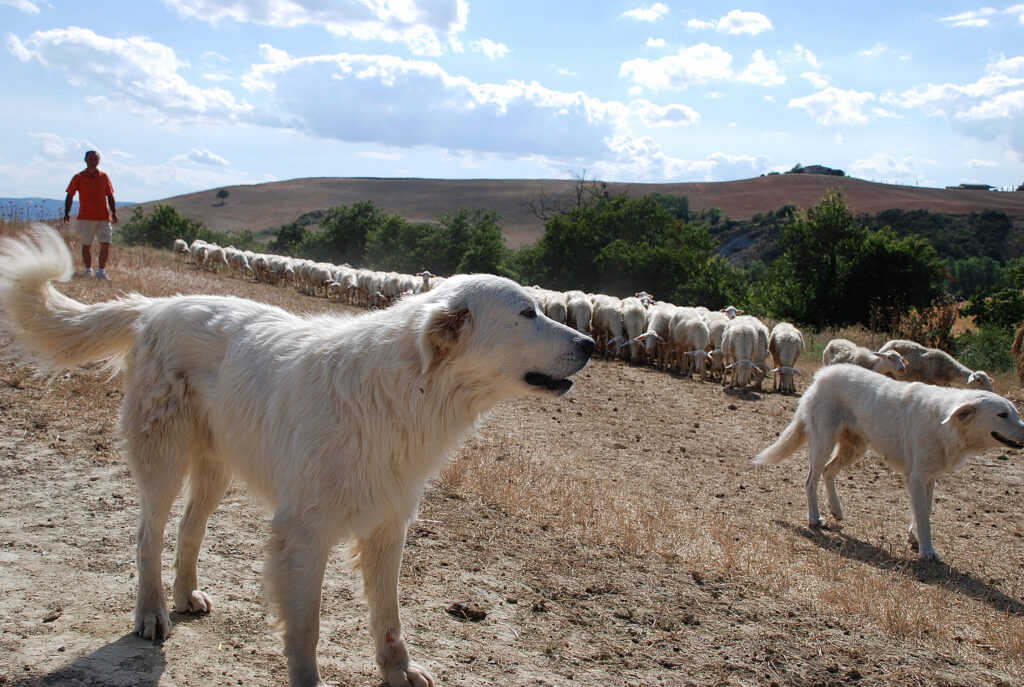
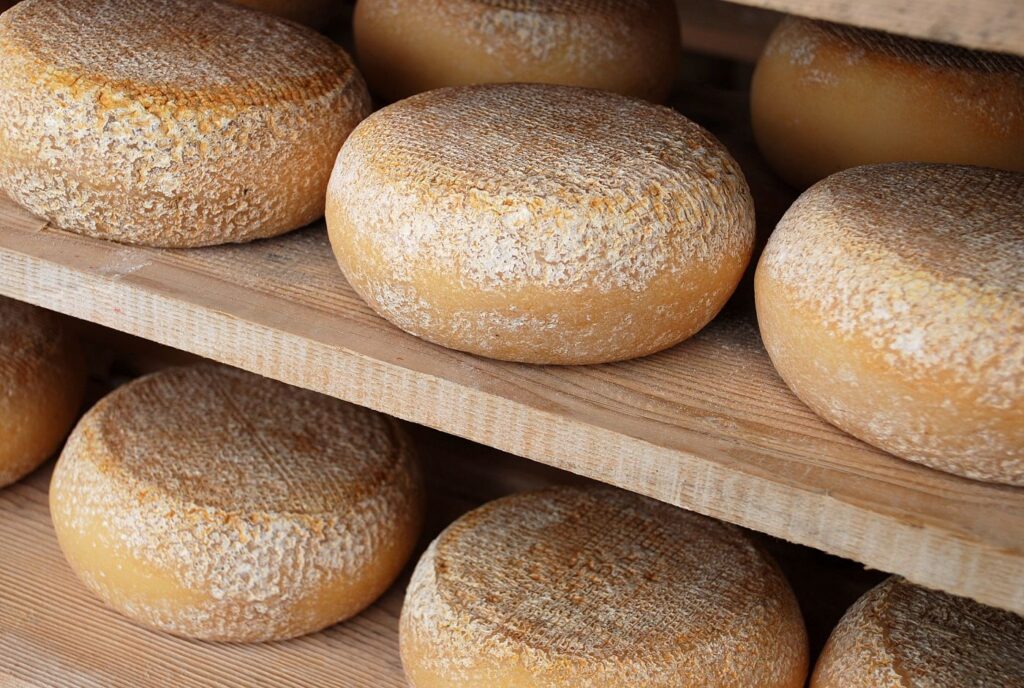
From time to time, we come across a flock of ewes returning for milking. Their milk produces the finest pecorino cheese. So it was fitting that the entire valley was recently designated a Unesco World Heritage Site.
The white paths
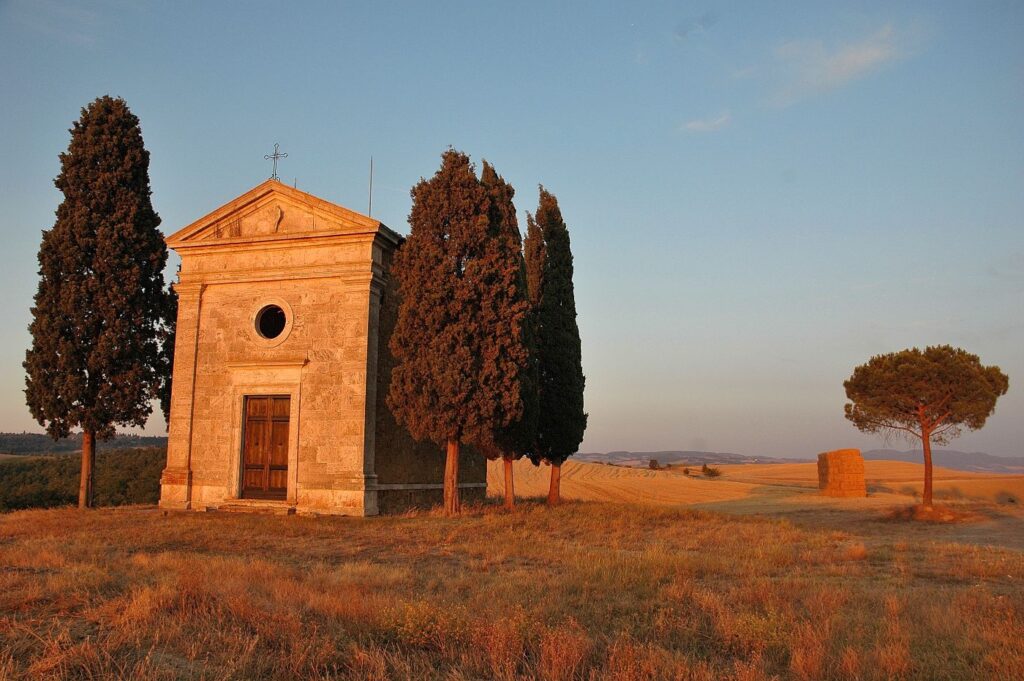
But the soul of this region lies at the end of the white paths that wind through woods and fields up into the hills, towards an abandoned farmhouse, a small chapel or simply a clump of cypress trees. At every turn, there are new surprises and... lots of game. Between San Quirico and Pienza, there's the path that leads to the Vitaleta chapel, built in solitude overlooking a field. The last stretch is on foot, among flocks of sheep. Best done in the evening, when the sun caresses the façade with honeycomb rays. Another magical spot is the hamlet of La Foce: from up here, you can discover one of the famous cypress-lined winding paths.
The Medici bath
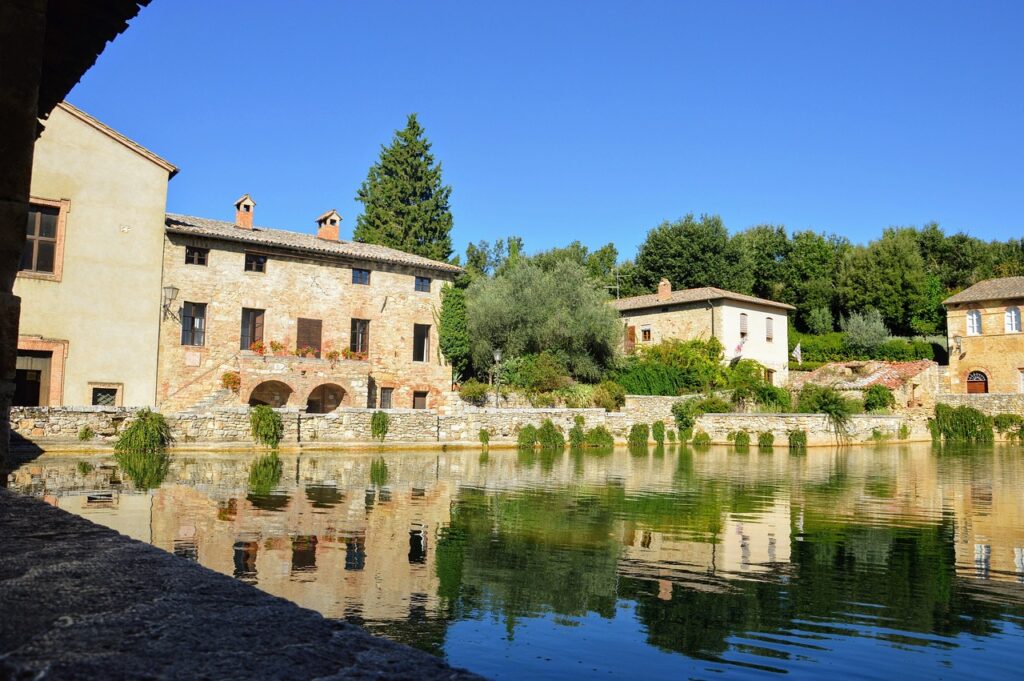
A stone's throw from the via Cassia linking Rome and Siena, a small road leads to Bagno Vignoni. Where you'd expect to find a central piazza, as in any Tuscan village, you'll find an immense pool. Built by the Medici for their spa treatments, it gurgles with bubbles of warm water. For a free, 100% natural swim, simply descend to the foot of the hill. The sulfurous water, still fed by old Roman pipes, cascades down to another pool laden with white silica sludge. The multicolored deposits add to the charm of the place.
Nectar of the gods
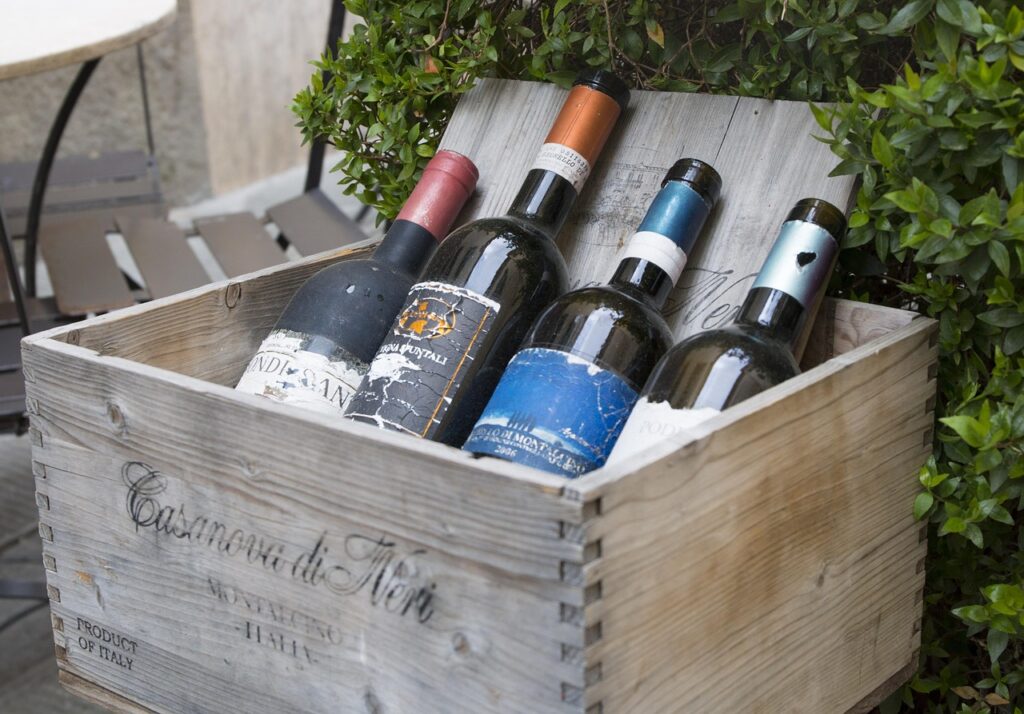
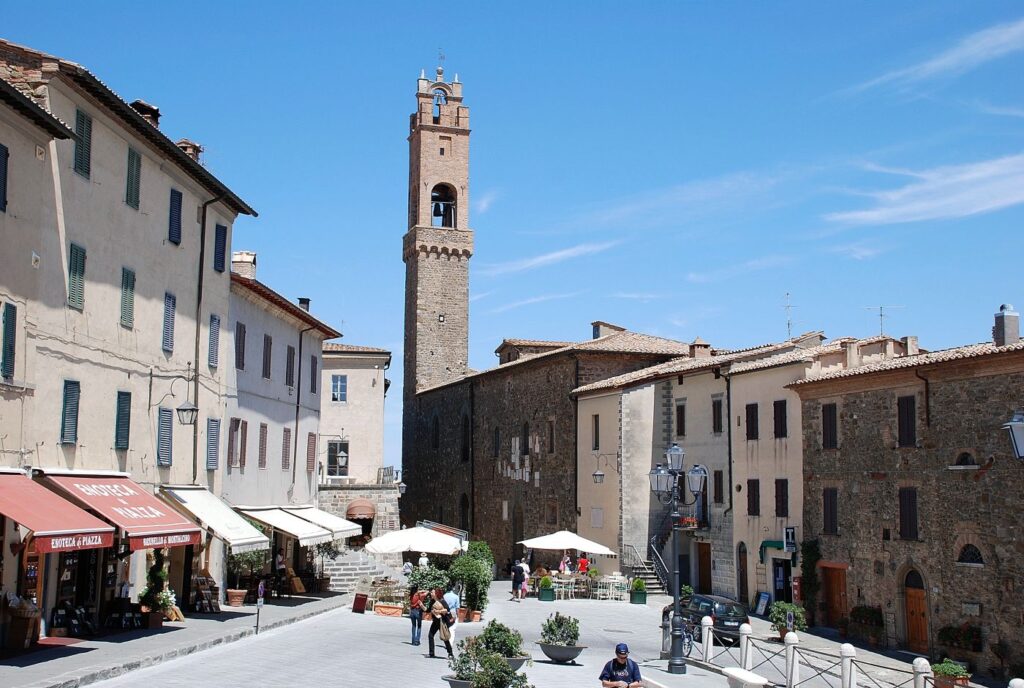
This fabulous terroir is also home to some of the world's finest wines: vino nobile in Montepulciano and above all brunello in Montalcino. Perched almost 600 m above sea level in the shadow of an imposing fortress, Montalcino was one of Tuscany's wealthiest cities during the Renaissance. It was the invention of brunello in the 19e century by Ferruccio Biondi Santi, who restored the town to its former glory. The town is particularly lively every Friday, market day. Farm produce, fish and picci (typical Tuscan handmade pasta) are happily side by side on the stalls. As noon approaches, we take refuge under the castle ramparts to enjoy a cool glass of brunello with some crostini.
San Quirico, timeless
San Quirico d'Orcia has retained a charming historic center, like a spinal column with a main artery around which all the stores revolve: a blond-stone collegiate church guarded by stone lions, several palaces and, along the ramparts, the Horti Leonini, Italian-style gardens whose layout has remained unchanged since the Renaissance. The ideal time: the evening stroll, when the main square and its little bar are invaded by villagers. The older ones sit on the stone benches and talk about the passing of time, while the young ones sitting on the terraces compete in elegance of dress.
Tuscan Jerusalem
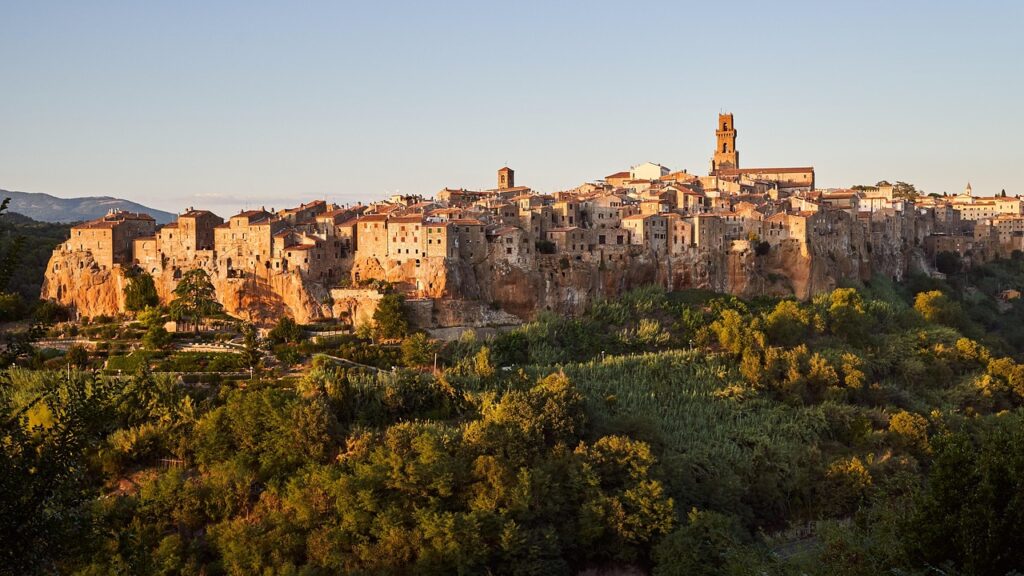
Continuing southwards, we enter the least-visited part of Tuscany. There are the slopes of Monte Amiata, that ancient volcano covered with chestnut groves. Behind them, more forgotten villages, theaters of life straight out of old Italian films from the 1950s. Sovana perched on a rocky spur, Sorano and above all Pitigliano, also clinging to a cliff. A veritable Gruyère, with cellars on several levels. Pitigliano was once home to a thriving Jewish community. A sort of little Tuscan Jerusalem with its own university. Today, those who remain carry on the tradition, visiting the kosher store and the old synagogue.